



综述 | 北京论坛(2026)“技术变革的哲学之问”
北京论坛(2026)
“技术变革的哲学之问”
Beijing Forum 2026
Philosophy of Technological Transformation
分论坛-新闻综述
Panel Session——News Roundup
2026年北京论坛以“文明的和谐与共同繁荣——科技变革与多元文明”为主题,于11月6日至8日在北京大学隆重举行。分论坛“技术变革的哲学之问”在北京大学英杰交流中心第二会议室成功举办。分论坛旨在以哲学智慧回应科技变革的深层挑战,特邀中外学者围绕科学实践、价值规范与文明对话等议题展开深入研讨。
The Beijing Forum 2026 took place at the Peking University of China from November 6th to 8th under the theme “The Harmony of Civilizations and Prosperity for All—Technoscientific Change and Civilizational Diversity”. The panel session “Philosophy of Technological Transformation” convened in Conference Room 2 of the Yingjie Exchange Center at Peking University. The session sought to draw on philosophical wisdom to address the profound challenges posed by technological transformation and brought together Chinese and international scholars for in-depth discussions on scientific practices, norms, and civilizational dialogue.
开幕致辞:技术变革的哲学之问
Opening Remarks: Philosophy of Technological Transformation
11月7日上午,“技术变革的哲学之问:科学实践、价值规范与文明对话”分论坛在北京大学英杰交流中心第二会议室开幕。
On the morning of November 7th, the panel session “Philosophical of Technological Transformation: Scientific Practice, Values, and Civilizational Dialogue” convened in Conference Room 2 of the Yingjie Exchange Center at Peking University.
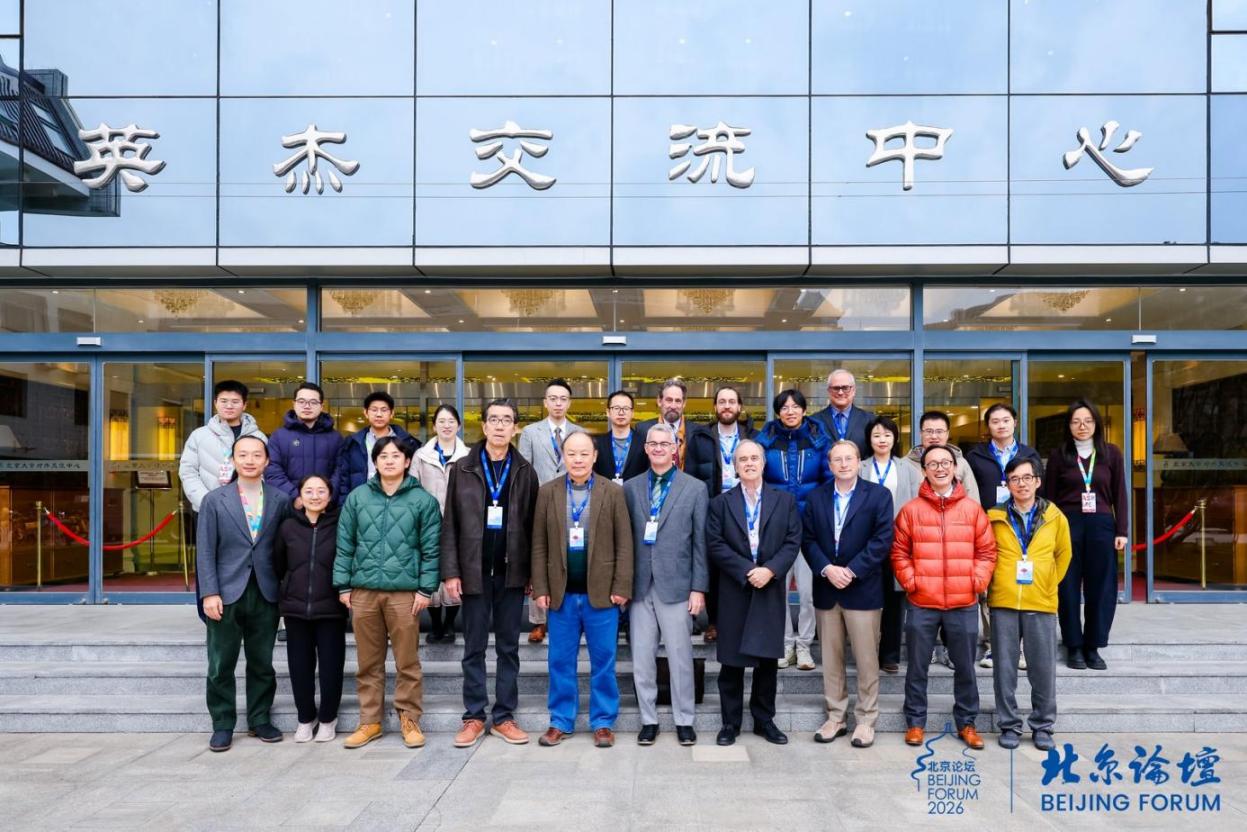
参会嘉宾合影
会议伊始,北京大学哲学系长聘副教授兼系主任助理陆俏颖致欢迎辞。她代表主办方,向与会嘉宾及远道而来的学者表示热烈欢迎,并向为分论坛默默付出的学生志愿者和技术团队致以感谢。在介绍北京大学哲学系的发展历程与学科构成后,她强调了哲学视角与科学研究之间对话的重要性,期待汇聚人文学科与科学领域的学者,共同探讨双方关切的问题。陆俏颖教授倡导加强不同思想传统之间的对话,构建跨学科、跨文化的学术共同体,携手应对技术变革带来的全球性挑战。
Qiaoying Lu, a tenured associate professor in the Department of Philosophy at Peking University, opened the meeting with welcoming remarks. On behalf of the organizers, she extended a warm welcome and sincere thanks to the guests and scholars who had traveled from afar, and paid tribute to the student volunteers and technical team for their dedicated support of the panel. After introducing the history and disciplinary breadth of Peking University’s Department of Philosophy, she emphasized the importance of in-depth dialogue between philosophy and science, expressing the hope of bringing together scholars from the humanities and sciences to explore questions of shared concern. Professor Lu called for stronger dialogue across intellectual traditions to address the global challenges posed by technological transformation and build an interdisciplinary and intercultural academic community.
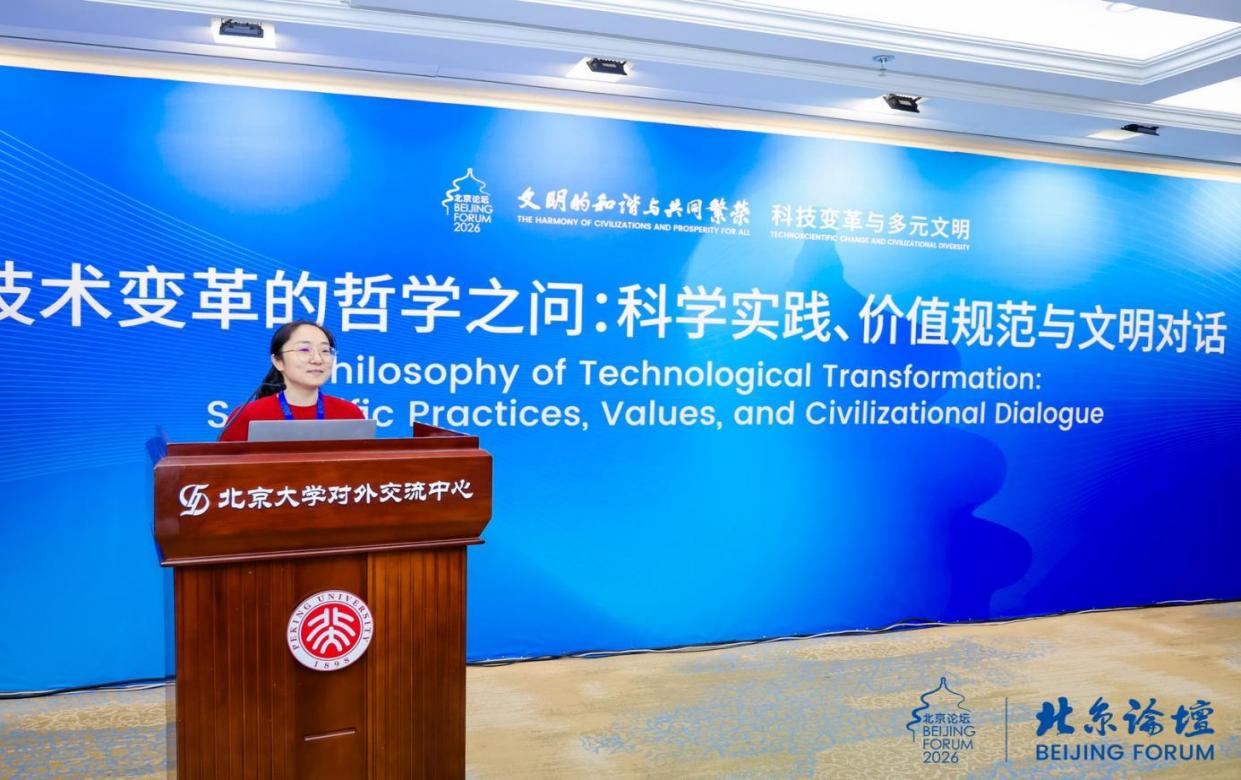
陆俏颖长聘副教授致辞
美国圣母大学哲学系教授Nicholas J. Teh代表致辞。他感谢北京大学哲学系多年来在学术交流与会议组织方面的持续合作,并向北京论坛、北京大学哲学系及工作人员为本次会议所做的筹备工作表示特别感谢。他强调跨学科研究的重要性,期待汇聚生物学、神经科学、神学、心灵哲学、行动哲学、人工智能及相关认知学科的研究者,开展坦诚、深入的对话。他以“火锅”为喻,形容不同学科的思想在交流中相互交融、愈加丰富,并期待与会学者展开富有启发的讨论。
Nicholas J. Teh, Professor in the Department of Philosophy at the University of Notre Dame, delivered remarks on behalf of the participants. He thanked Peking University’s Department of Philosophy for its longstanding collaboration in academic exchange and conference organization, and expressed particular gratitude to the Beijing Forum, the department, and the staff for their work in preparing the meeting. He emphasized the importance of interdisciplinary research and looked forward to bringing together researchers in biology, neuroscience, theology, philosophy of mind, philosophy of action, artificial intelligence, and related cognitive disciplines for candid, in-depth dialogue. Comparing the meeting to a “hot pot”, he described how ideas from different disciplines could mingle and grow richer through exchange, and expressed his anticipation of stimulating discussions among participants.
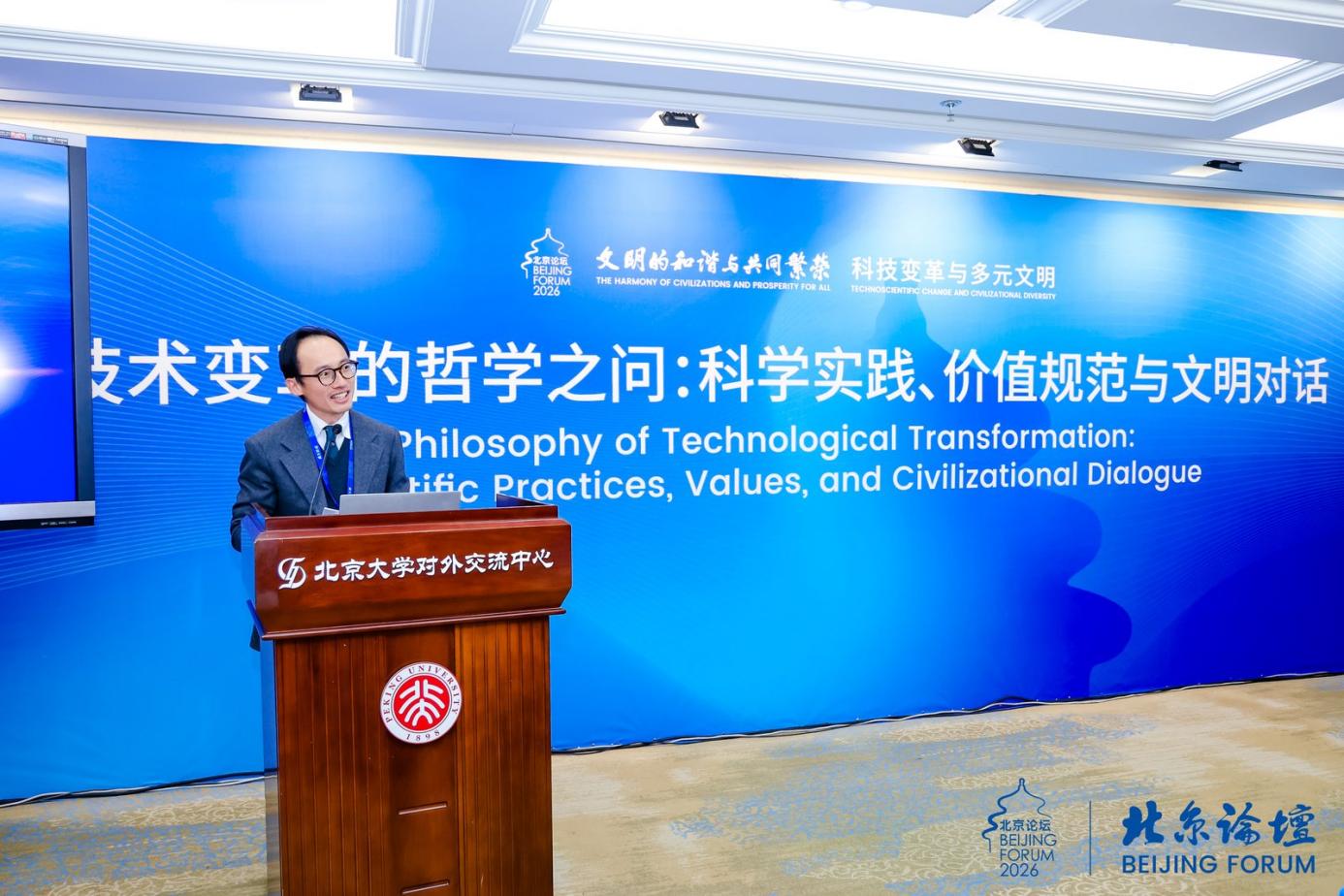
Nicholas J. Teh教授致辞
11月7日上午报告
Presentations on the Morning of November 7th
11月7日上午,北京论坛(2026)“技术变革的哲学之问”分论坛首场专题讨论“具身理性与教育”由北京大学哲学系长聘副教授陆俏颖主持,两位学者分别作报告。
On the morning of November 7th, the Beijing Forum (2026) session panel “Philosophy of Technological Transformation” held its first thematic session, “Embodied Rationality and Education.” Qiaoying Lu, a tenured associate professor in the Department of Philosophy at Peking University, chaired the session, which featured presentations by two scholars.
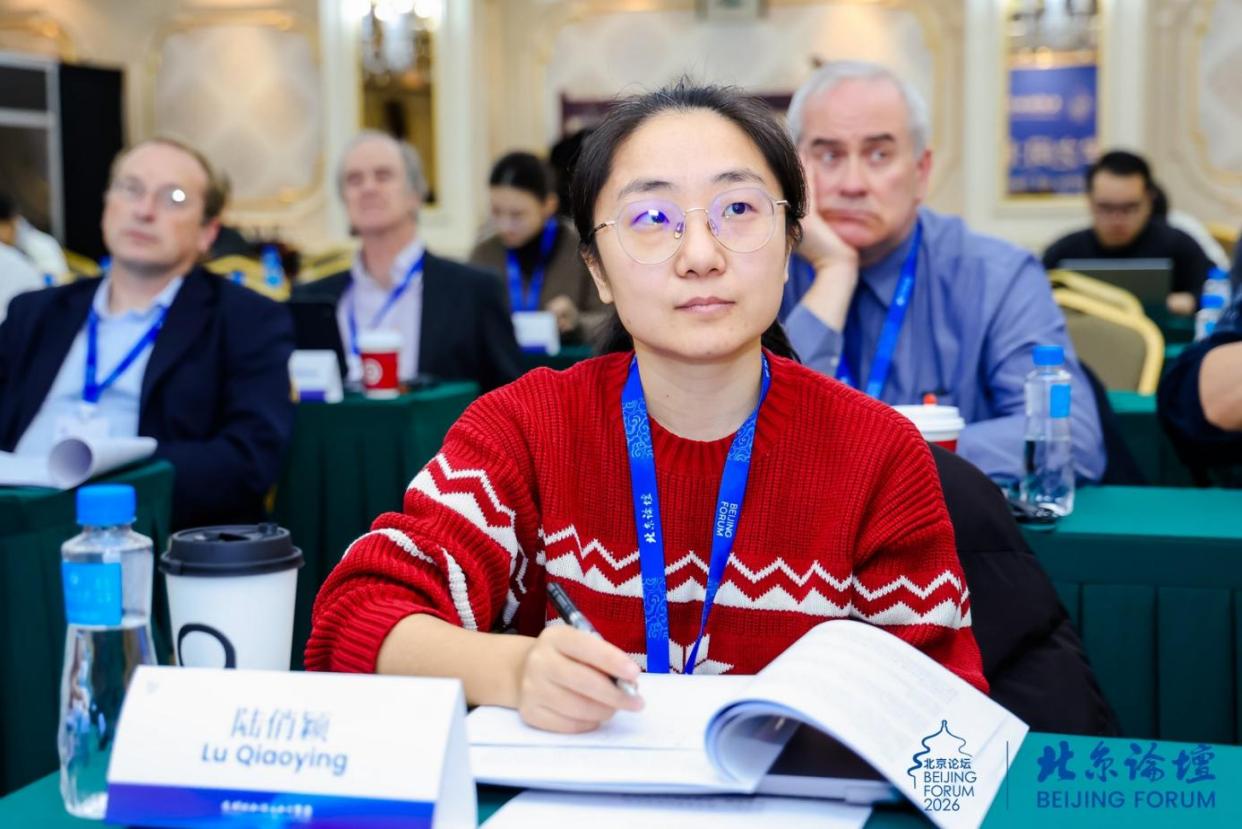
陆俏颖长聘副教授主持
第一位发言人是美国伊利诺伊大学哲学学院特聘教授John Schwenkler,报告题为《理性动物的形态》。Schwenkler教授指出,关于人体形态与人类理性密切相关的观点,可追溯至柏拉图和亚里士多德的哲学传统。在此基础上,Schwenkler教授探讨了这一传统在人工智能语境下的当代意义,指出将智能归属于复杂计算系统,往往依据其在高级认知与智力任务中的表现与人类能力的相似性。然而,这种相似性并不足以说明此类系统具有智能,理性如何能够以不同于人类身体的形态实现,仍有待澄清。
The first speaker, John Schwenkler, Distinguished Professor of Philosophy at the University of Illinois, delivered a presentation titled “The Shape of the Rational Animal.” Professor Schwenkler traced the close connection between human bodily form and human rationality to the philosophical tradition of Plato and Aristotle. He then explored this tradition’s contemporary significance in the context of artificial intelligence, noting that attributions of intelligence to complex computational systems often rely on similarities between their performance on higher cognitive and intellectual tasks and human abilities. Such similarities, however, do not establish that these systems possess intelligence. How rationality might take a form different from the human body remains an open question.
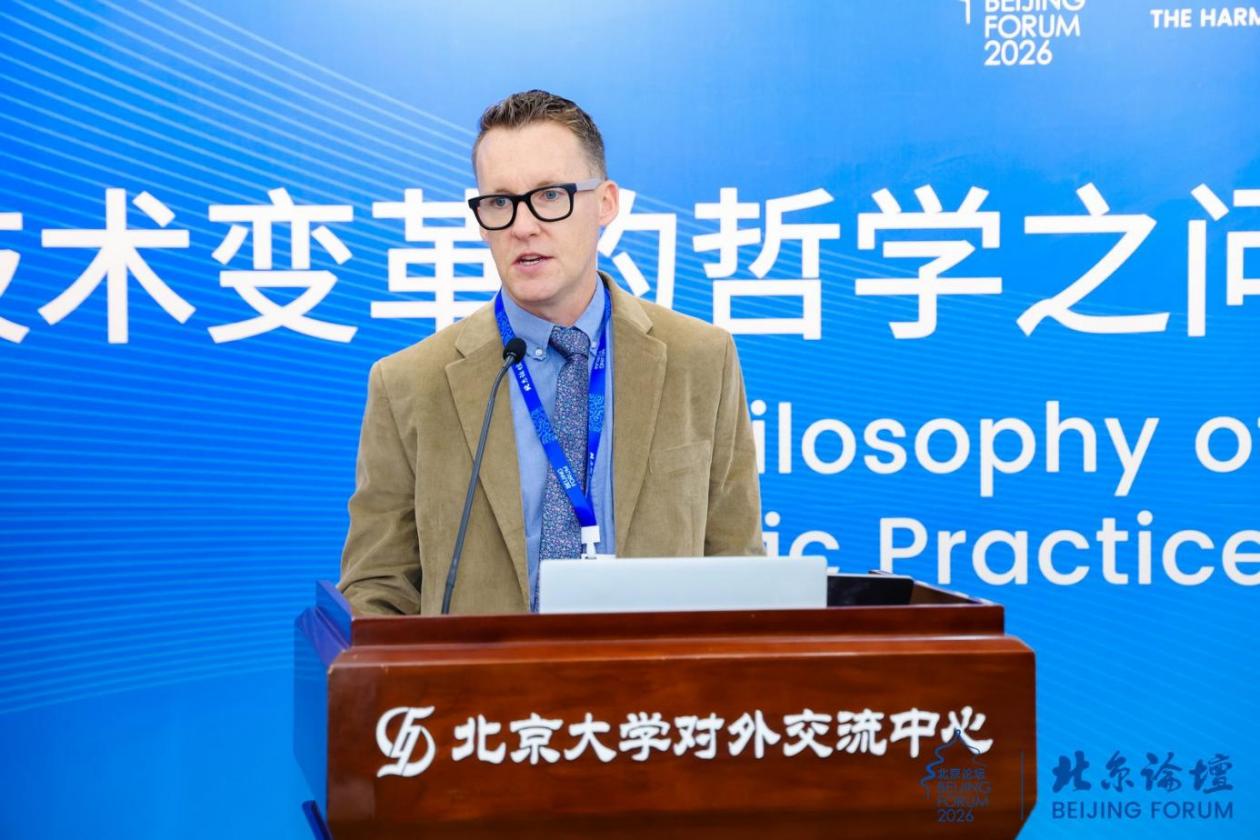
John Schwenkler教授发言
第二位发言人是北京大学外国哲学研究所所长韩水法教授,报告题为《在身教育——论人工智能时代的大学教育》。韩水法教授指出,人工智能既为现代大学制度带来了前所未有的机遇,也对其提出了根本性挑战。面对人工智能时代人的存在方式与自身性质的变化,韩水法教授提出了“在身教育”的理念,主张充分利用人工智能技术,面向人类未来,从根本上改革现行大学教学制度,以维护人类的中心地位,并在与人工智能长期共存的过程中不断提升人类的能力与德性。
The second speaker, Professor Shuifa Han, Director of the Institute of Foreign Philosophy at Peking University, delivered a presentation titled “Zaishen Education (Person-Centered Lifelong Education): On University Education in the Age of Artificial Intelligence”. Professor Han noted that AI presents both unprecedented opportunities and fundamental challenges for the modern university system. In response, he proposed the concept of “Zaishen Education”, advocating the full use of AI technology to systematically reform university teaching and organizational structures, with an emphasis on cultivating human emotions, will, cooperation, and creativity. These reforms aim to preserve human centrality and continually enhance human capabilities and virtues through long-term coexistence with AI.
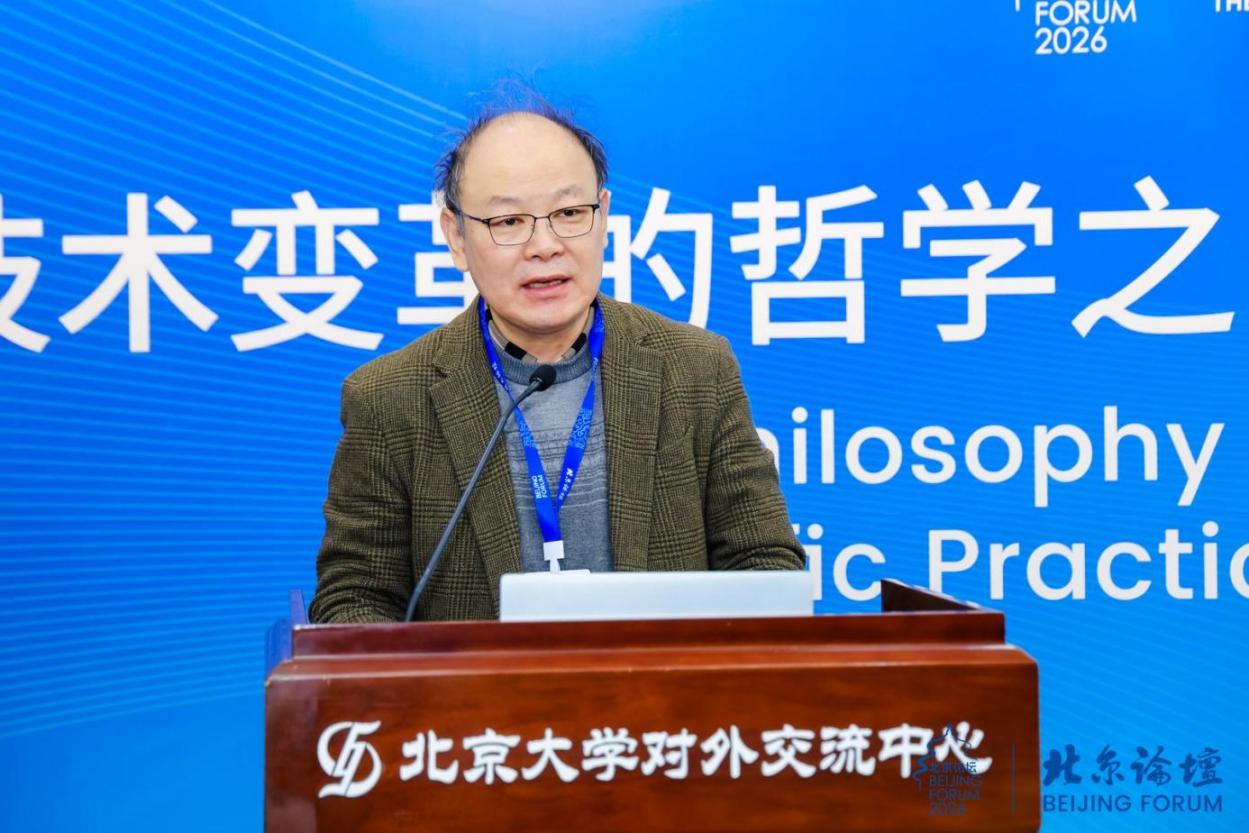
韩水法教授发言
讨论环节,北京大学哲学系闫琦琛助理教授就人工智能时代是否仍需保留“哲学导论”等基础课程向韩水法教授提问。韩水法教授回应,应区分基础课程中的知识传授与研究性学习,前者可借助人工智能开展,后者则需结合自主学习、线上讨论与辅导,并持续优化教学安排。
During the discussion, Yan Qichen, Assistant Professor in the Department of Philosophy at Peking University, asked Professor Han Shuifa whether foundational courses such as “Introduction to Philosophy” should be retained in the age of AI. Professor Han responded that knowledge transmission should be distinguished from research-based learning in foundational courses. The former can be supported by AI, while the latter requires a combination of independent learning, online discussion, and guidance, alongside continuous refinement of teaching arrangements.
随后,分论坛举行第二场名为“目的论与身体能动性”的专题讨论。本场讨论由美国圣母大学瓜达卢佩圣母神学讲席教授Paul Scherz主持,三位学者分别作报告。
The second thematic session, “Teleology and Bodily Agency” took place. The session featured presentations by three scholars and was chaired by Paul Scherz, Our Lady of Guadalupe College Professor of Theology at the University of Notre Dame.
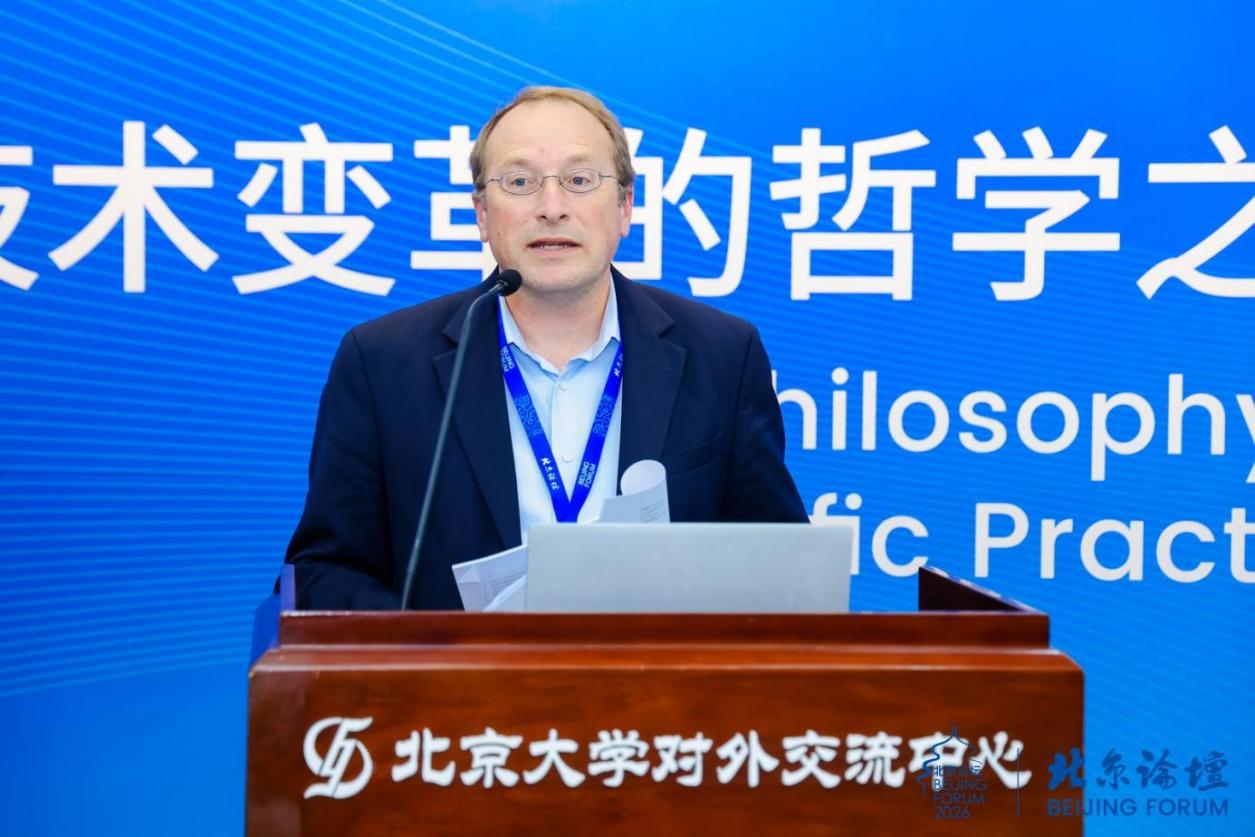
Paul Scherz教授主持
第一位发言人是美国圣母大学Jacques Maritain中心主任、哲学系John O’Callaghan教授,报告题为《能动性、智能与欲望:人类与人工智能》。O’Callaghan教授指出,谈论人工智能时理解思维与智能的方式,承袭了当代心灵哲学中的一个问题,即认为可以脱离欲望及更为根本的能动性来解释思维。O’Callaghan教授强调,有必要区分内在目的论与外在目的论,指出人工智能模型并不具有自身的欲望,并提出应据此思考人工智能与信任、合作及团结等人类善之间的关系。
The first speaker, John O’Callaghan, Professor in the Department of Philosophy and Director of the Jacques Maritain Center at the University of Notre Dame, delivered a presentation titled “Agency, Intelligence, and Desire: Humans Being and AI”. Professor O’Callaghan noted that approaches to understanding thought and intelligence in discussions of AI inherit a problem in contemporary philosophy of mind, namely the assumption that thought can be explained independently of desire and, more fundamentally, agency. He emphasized the need to distinguish between intrinsic and extrinsic teleology, noting that AI models do not possess desires of their own, and proposed that this distinction could inform reflection on the relationship between AI and human goods such as trust, cooperation, and solidarity.
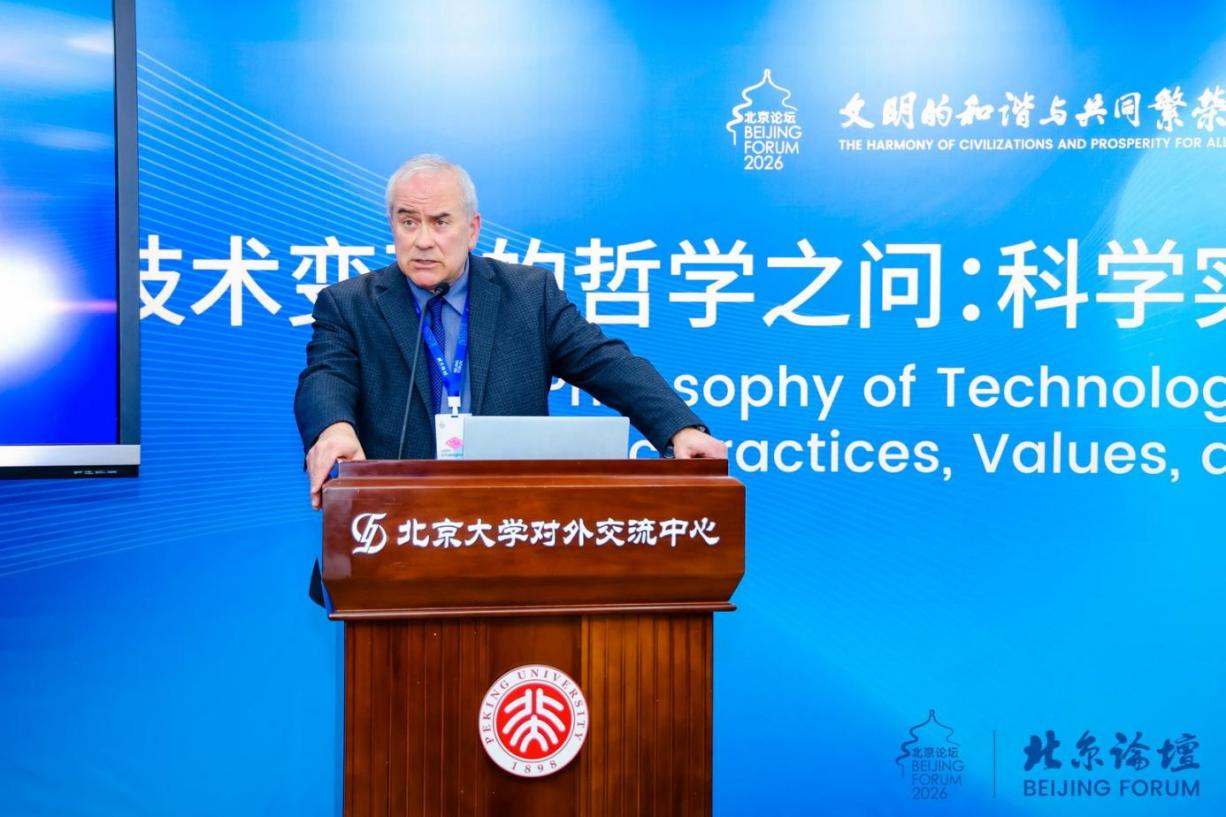
John O’Callaghan教授发言
第二位发言人为北京大学哲学系闫琦琛助理教授,报告题为《训练历史与人工智能的形而上学——走向目的论本体论》。闫琦琛助理教授指出,当代人工智能形而上学研究主要采取共时性进路,侧重计算结构与功能属性,却忽视了训练历史的构成性作用。借鉴德雷福斯对人类专长的解释,以及米利肯、尼安德等人的生物功能历史理论,闫琦琛助理教授提出一种人工智能形而上学的目的论进路,将大语言模型的优化过程类比于生物有机体的演化过程,认为二者均体现出弱目的论特征。因此,人工智能不仅是共时性的计算系统,更是由历史构成、具有目标导向的系统。
The second speaker, Qichen Yan, Assistant Professor in the Department of Philosophy at Peking University, delivered a presentation titled “Training History and the Metaphysics of Artificial Intelligence—Toward a Teleological Ontology”. Professor Yan noted that contemporary research on the metaphysics of AI primarily adopts a synchronic approach, emphasizing computational structures and functional properties while overlooking the constitutive role of training history. Drawing on Dreyfus’s account of human expertise and historical theories of biological function developed by Millikan, Neander, and others, he proposed a teleological approach to the metaphysics of AI. He compared the optimization of large language models to the evolution of biological organisms, arguing that both exhibit weak teleological features. AI, therefore, is not merely a synchronic computational system, but also a historically constituted, goal-directed system.
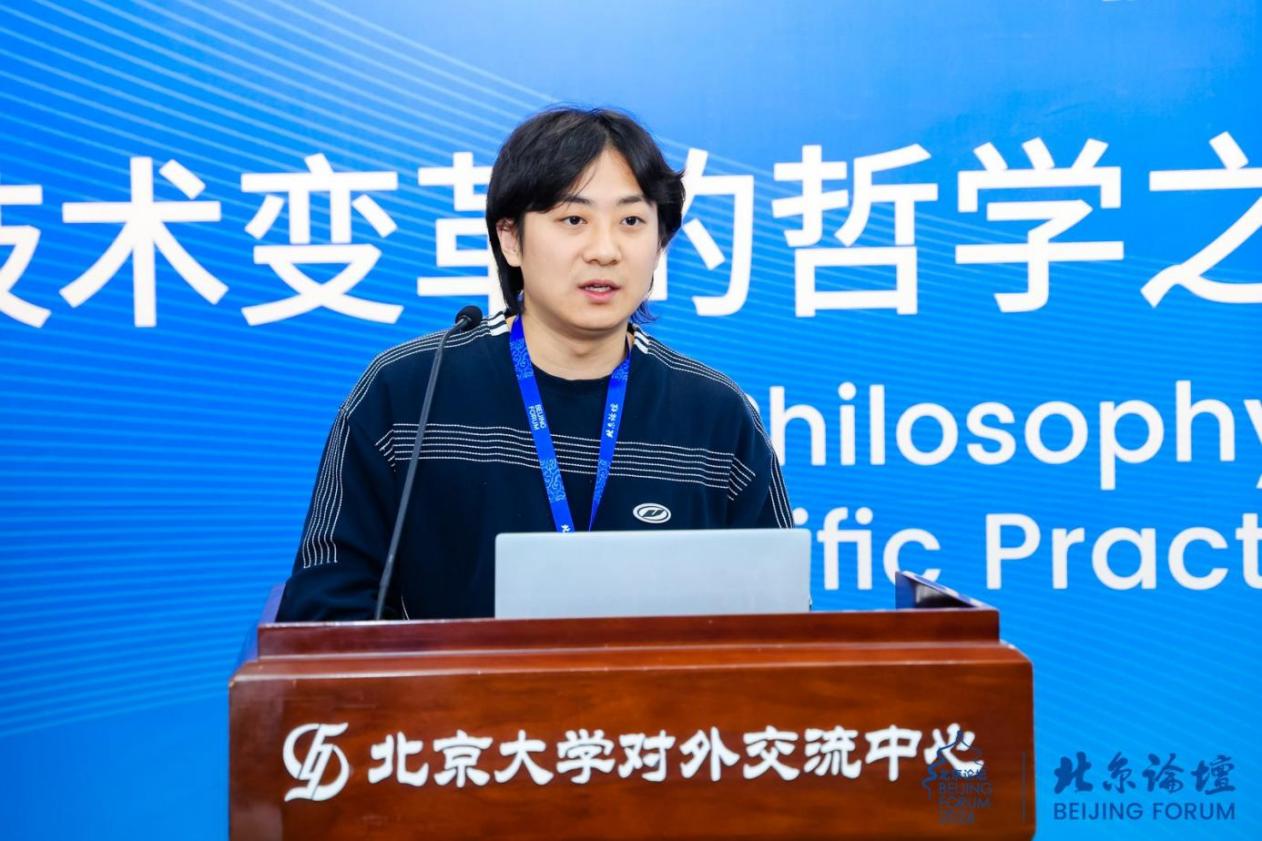
闫琦琛助理教授发言
第三位发言人为北京大学生命科学学院助理教授梁希同,报告题为《章鱼与乌贼的自我识别和身体能动性》。梁希同助理教授指出,头足类动物的复杂认知能力独立于脊椎动物演化而来,章鱼能识别自身视频图像中的虚拟标记并自发梳理,乌贼则能通过视觉反馈监测自身外观、动态调整伪装。梁希同助理教授认为,头足类动物利用视觉自我识别指导身体行为的能力,表明适应性伪装可能是自我识别能力演化的重要驱动力,为研究自我识别与身体能动性的关系提供了独特视角,也为理解智能的多元演化路径提供了新证据。
The third speaker, Xitong Liang, Assistant Professor in the School of Life Sciences at Peking University, delivered a presentation titled “Self-Recognition and Bodily Agency in Octopuses and Cuttlefish”. Professor Liang noted that cephalopods’ complex cognitive abilities evolved independently of those of vertebrates. Octopuses can recognize virtual marks on video images of themselves and spontaneously engage in grooming, while cuttlefish can monitor their appearance through visual feedback and dynamically adjust their camouflage. He argued that cephalopods’ ability to use visual self-recognition to guide bodily behavior suggests that adaptive camouflage may be an important evolutionary driver of self-recognition. These findings offer a distinctive perspective on the relationship between self-recognition and bodily agency, as well as new evidence for understanding the diverse evolutionary pathways of intelligence.
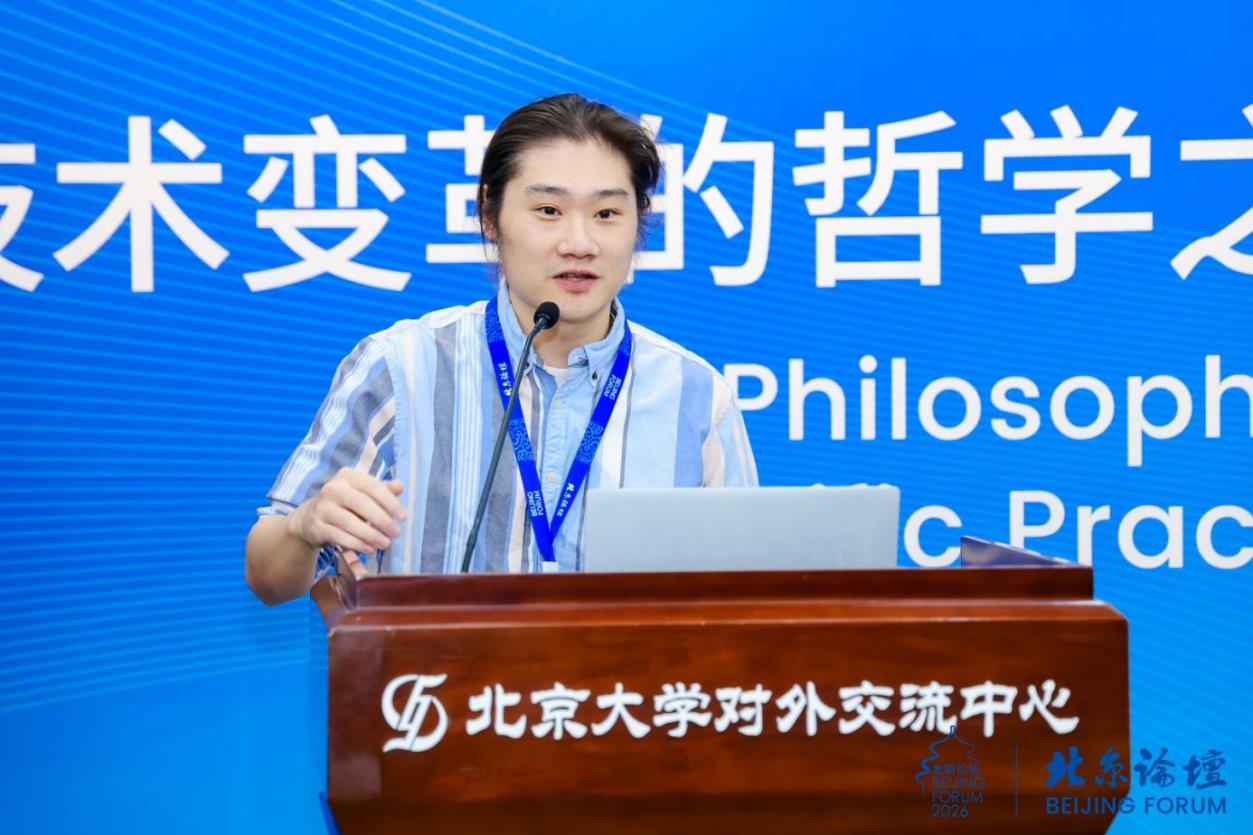
梁希同助理教授发言
报告结束后,Alva Noë教授就伪装能力与自我识别的关系、其他伪装物种能否通过镜像测试,以及镜像测试检验的是自我意识还是工具使用能力等问题,与梁希同助理教授展开深入讨论。梁希同回应,头足类具有适应性伪装能力,而外观固定的伪装物种也可能面临认识自身外观的演化压力。他同时认同,镜像测试可能反映工具使用的灵活性,而不能直接证明自我意识。
Following the presentation, Professor Alva Noë engaged in an in-depth discussion with Assistant Professor Xitong Liang about the relationship between camouflage and self-recognition, whether other species that use camouflage could pass the mirror test, and whether the test assesses self-awareness or tool-use abilities. Professor Liang responded that cephalopods possess adaptive camouflage abilities, while species with fixed camouflage patterns may also face evolutionary pressures to recognize their own appearance. He also agreed that the mirror test may reflect flexibility in tool use rather than provide direct evidence of self-awareness.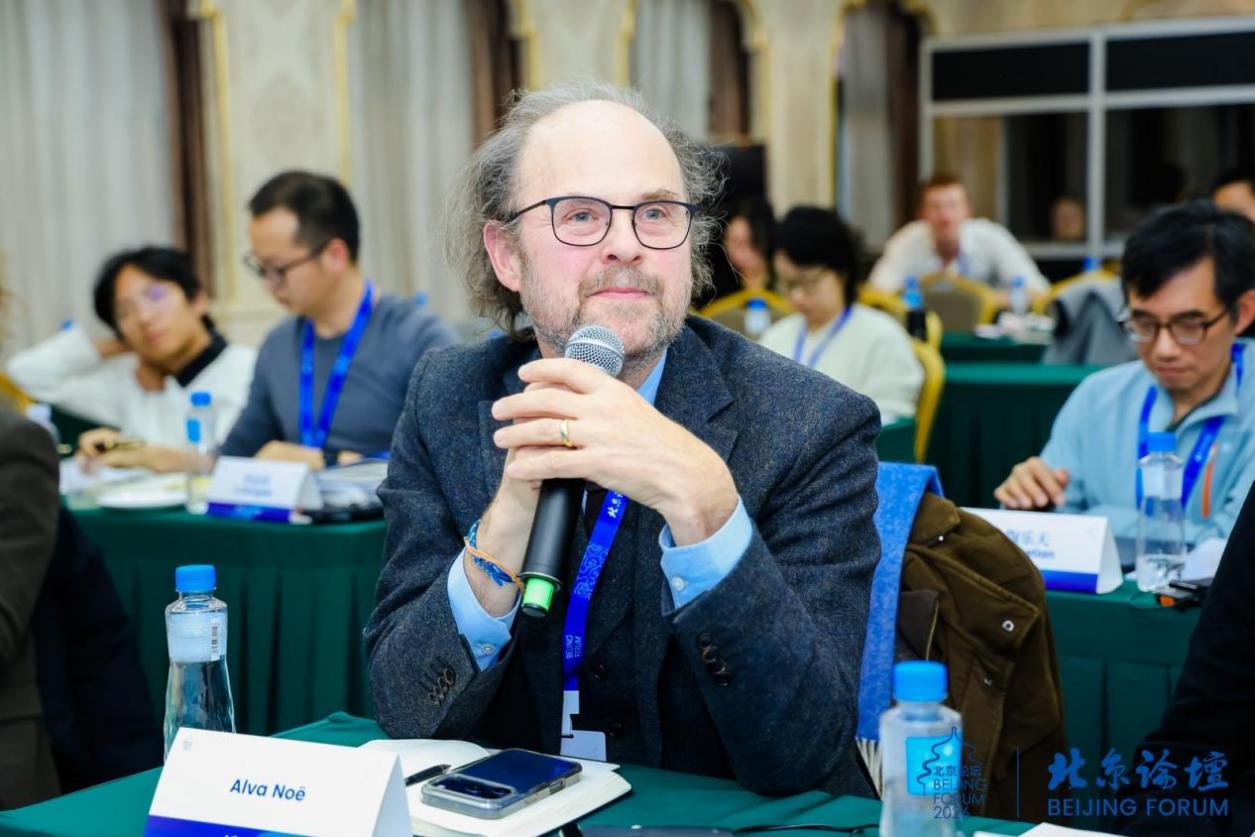
Alva Noë教授提问
11月7日下午报告
Presentations on the Afternoon of November 7th
11月7日下午,分论坛举行第三场名为“科学证据、模型与实践”的专题讨论。专题讨论由北京大学哲学系助理教授王昱洲主持,三位学者进行了发言。
On the afternoon of November 7th, the third thematic session, “Scientific Evidence, Models, and Practices”, took place. Yuzhou Wang, Assistant Professor in the Department of Philosophy at Peking University, chaired the session, which featured presentations by three scholars.
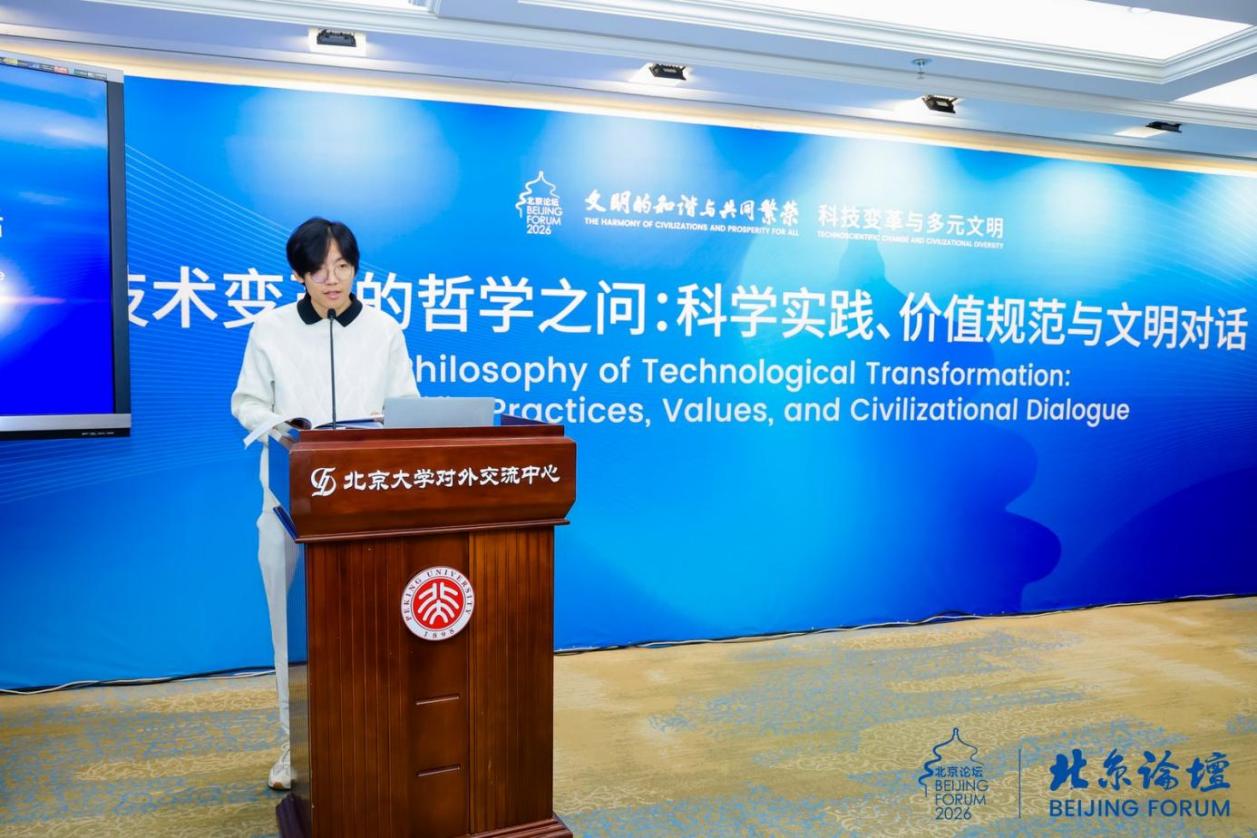
王昱洲助理教授主持
第一位发言人是美国明尼苏达大学生态学、进化与行为学系主任Kieran McNulty教授,发言主题为《缺乏证据并不意味着卓越:数字时代的人类起源研究》。McNulty教授在报告中指出,古人类学致力于研究早期人类的生物与文化演化,但由于证据有限且存在偏差,其研究不可避免地依赖推测,并面临不确定性。McNulty教授强调,研究不仅应报告结果,还应明确结论的置信程度,避免以复杂的分析和视觉呈现掩盖证据的不足。McNulty教授提出,科学家应秉持责任意识与学术自律,在有限数据的基础上开展稳健分析,为结论划定合理的“置信界限”。
The first speaker, Professor Kieran McNulty, Head of the Department of Ecology, Evolution & Behavior at the University of Minnesota, delivered a presentation titled “Absence of Evidence Is Not Evidence of Excellence: Conducting Human Origins Research in the Digital Age”. In his presentation, Professor McNulty noted that paleoanthropology investigates the biological and cultural evolution of early humans, but inevitably relies on conjecture and faces uncertainty owing to limited and biased evidence. He emphasized that researchers should report not only their findings but also their degree of confidence in those conclusions, avoiding the use of complex analyses and visual presentations to obscure insufficient evidence. He urged scientists to exercise responsibility and academic self-discipline, conduct robust analyses with limited data, and establish reasonable “confidence limits” for their conclusions.
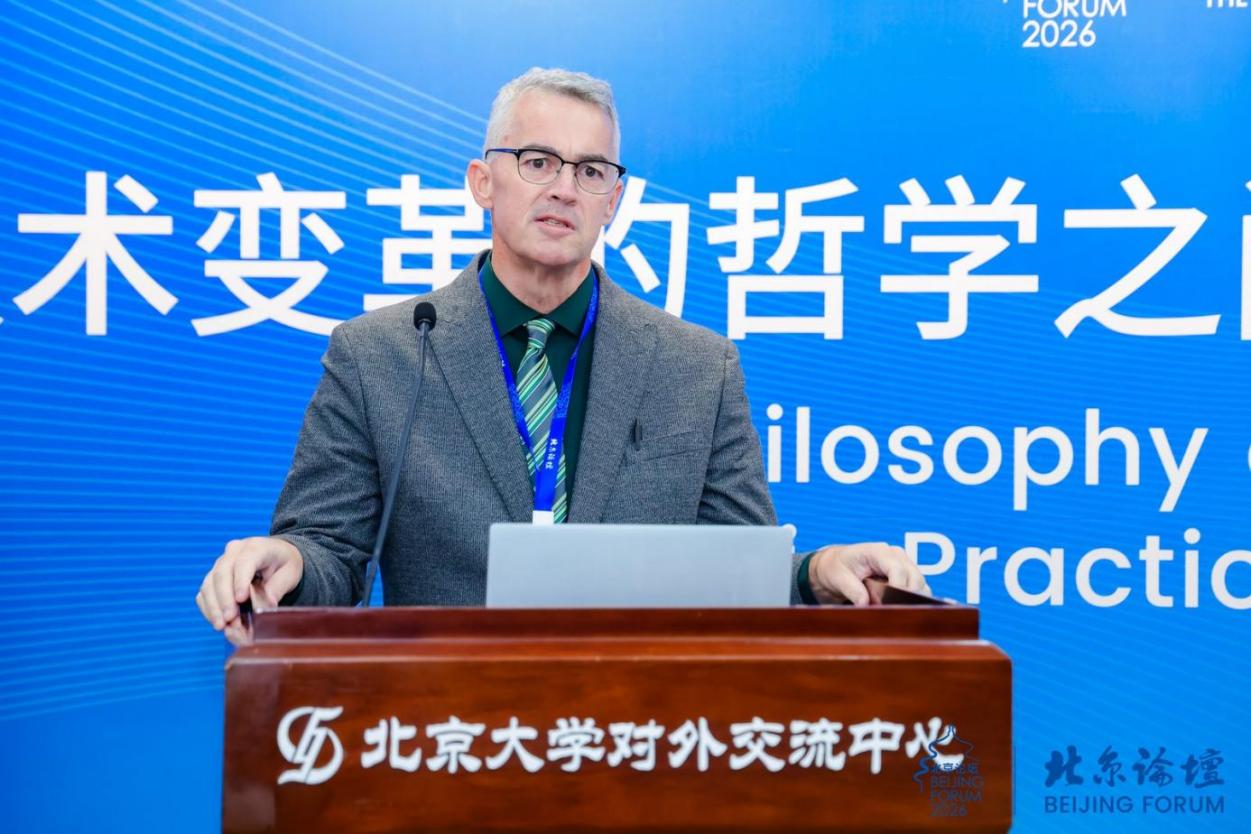
Kieran McNulty教授
第二位发言人为北京大学生命科学学院生物信息中心研究员陶乐天,发言主题为《综合之前:人工智能、理解与科学小人》。陶乐天研究员以人工智能参与数学难题求解所引发的争议为例,指出形式验证并不等同于对科学知识的真正理解。他以“科学小人”为诊断工具,提出“认识论制图”方法,借助人工智能揭示知识形成与整合的认识论结构。他强调,人工智能对科学理解的贡献,不仅在于产出正确结果或可执行模型,更在于揭示使这些结果与模型变得可理解的认识工作。
The second speaker, Letian Tao, Researcher at the Center for Bioinformatics in the School of Life Sciences at Peking University, delivered a presentation titled “Before Synthesis: AI, Understanding, and the Scientific Homunculus”. Drawing on controversies surrounding AI’s involvement in solving difficult mathematical problems, Researcher Tao argued that formal verification does not amount to genuine understanding of scientific knowledge. Using the “scientific homunculus” as a diagnostic tool, he proposed an approach called “epistemological mapping”, employing AI to reveal the epistemological structures underlying knowledge formation and integration. Researcher Tao emphasized that AI contributes to scientific understanding not only by producing correct results or executable models, but also by revealing the epistemic work that makes those results and models intelligible.
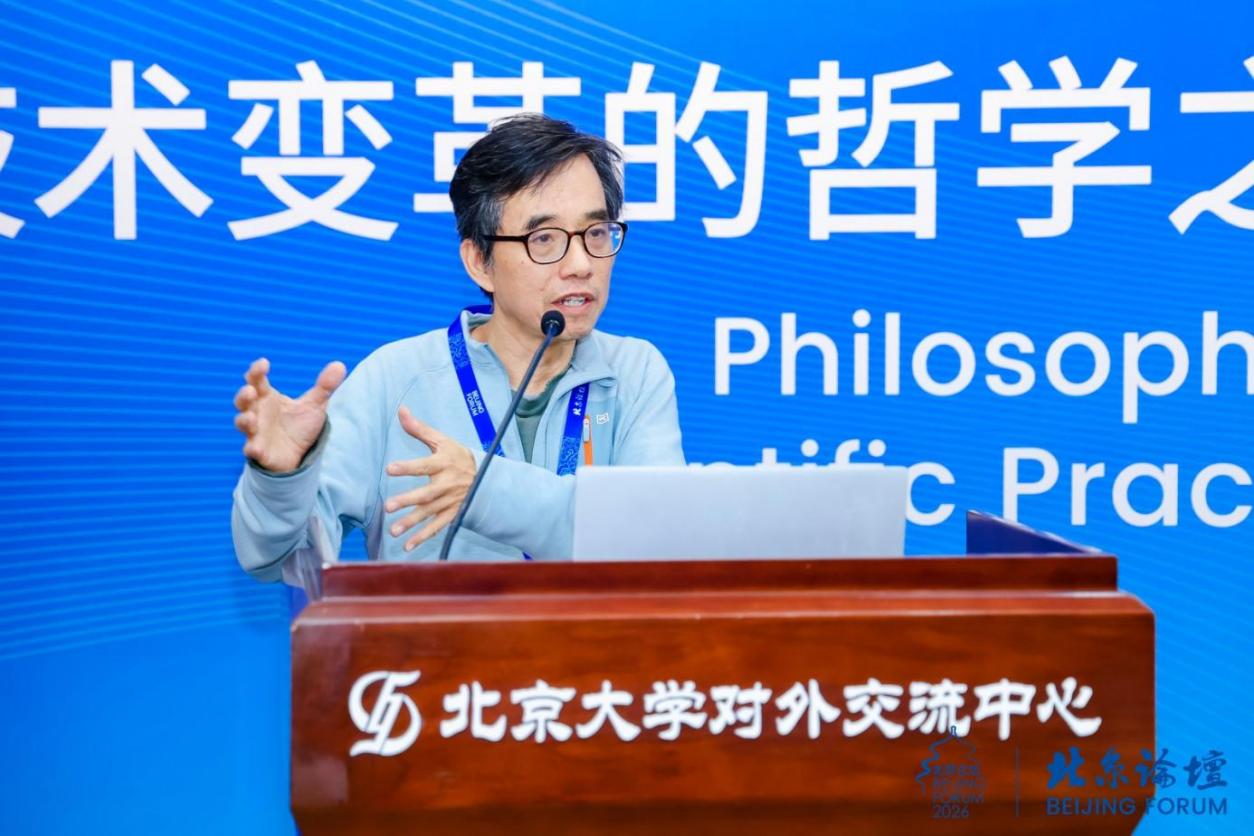
陶乐天研究员发言
第三位发言人为美国圣母大学哲学系Nicholas J. Teh教授,发言主题为《面对人工智能的纠缠实践:以数学与千禧年难题为例》。Teh教授以生成式人工智能“解决”千禧年难题引发的争议为切入点,分析数学共同体由此面临的理智与情感交织的危机。Teh教授探讨了数学推理与审美的内在关联,以及人工智能如何促使人们重新审视数学实践的本质。借助维特根斯坦的语言游戏思想,Teh教授揭示了理性推理与审美判断的交织关系,并将讨论拓展至物理学及其他创造性实践。
The third speaker, Nicholas J. Teh, Professor in the Department of Philosophy at the University of Notre Dame, delivered a presentation titled “Entangled Practices in the Face of AI: The Case of Mathematics and the Millennium Problems”. Taking controversies over generative AI’s purported “solutions” to the Millennium Prize Problems as his starting point, Professor Teh examined the resulting crisis within the mathematical community, in which intellectual and emotional concerns intertwine. He explored the intrinsic connection between mathematical reasoning and aesthetics, and how AI prompts a reconsideration of the nature of mathematical practice. Drawing on Wittgenstein’s notion of language games, he illuminated the interplay between rational reasoning and aesthetic judgment, extending the discussion to physics and other creative practices.
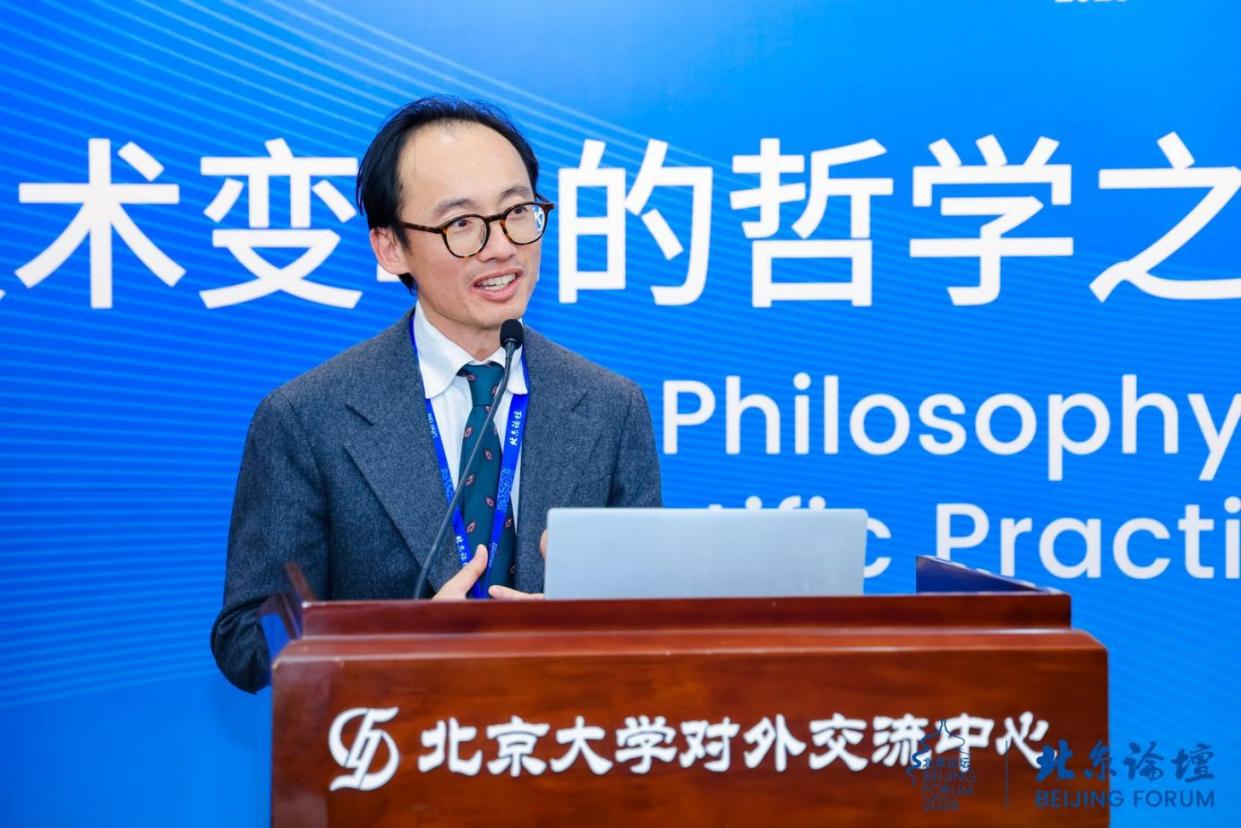
Nicholas J. Teh教授发言
报告结束后,复旦大学哲学学院特聘教授刘闯提出,大型语言模型或许也在使用语言,只是其意义不够丰富;自动化或人工智能数学也未必会消解人类数学的价值。Nicholas J. Teh教授回应,年轻研究者面临的情感与价值危机值得关注,即使这种反应未必完全理性。关于语言,他强调,大型语言模型对人类语言存在不对称的依赖,人类语言具有优先性和基础性;即便语言不断演变,大型语言模型仍是工具,而非真正的交谈伙伴。
Following the presentation, Chuang Liu, Distinguished Professor in the School of Philosophy at Fudan University, suggested that large language models might indeed use language, albeit not in a sufficiently rich sense, and that automation or AI-driven mathematics need not diminish the value of human mathematics. Professor Nicholas J. Teh responded that the emotional crisis and crisis of value facing young researchers deserve attention, even if their reactions may not be entirely rational. Regarding language, he emphasized that large language models depend asymmetrically on human language, which is prior and foundational. Even as language continues to evolve, large language models remain tools rather than genuine interlocutors.
随后,分论坛举行名为“人的能动性、具身性与人工智能”的第四场专题讨论。由北京大学哲学系长聘副教授王小塞主持,三位学者分别作报告。
The fourth thematic session, “Human Agency, Embodiment, and AI” took place. The session featured presentations by three scholars and was chaired by Sebastian Sunday Grève, a tenured associate professor in the Department of Philosophy at Peking University.
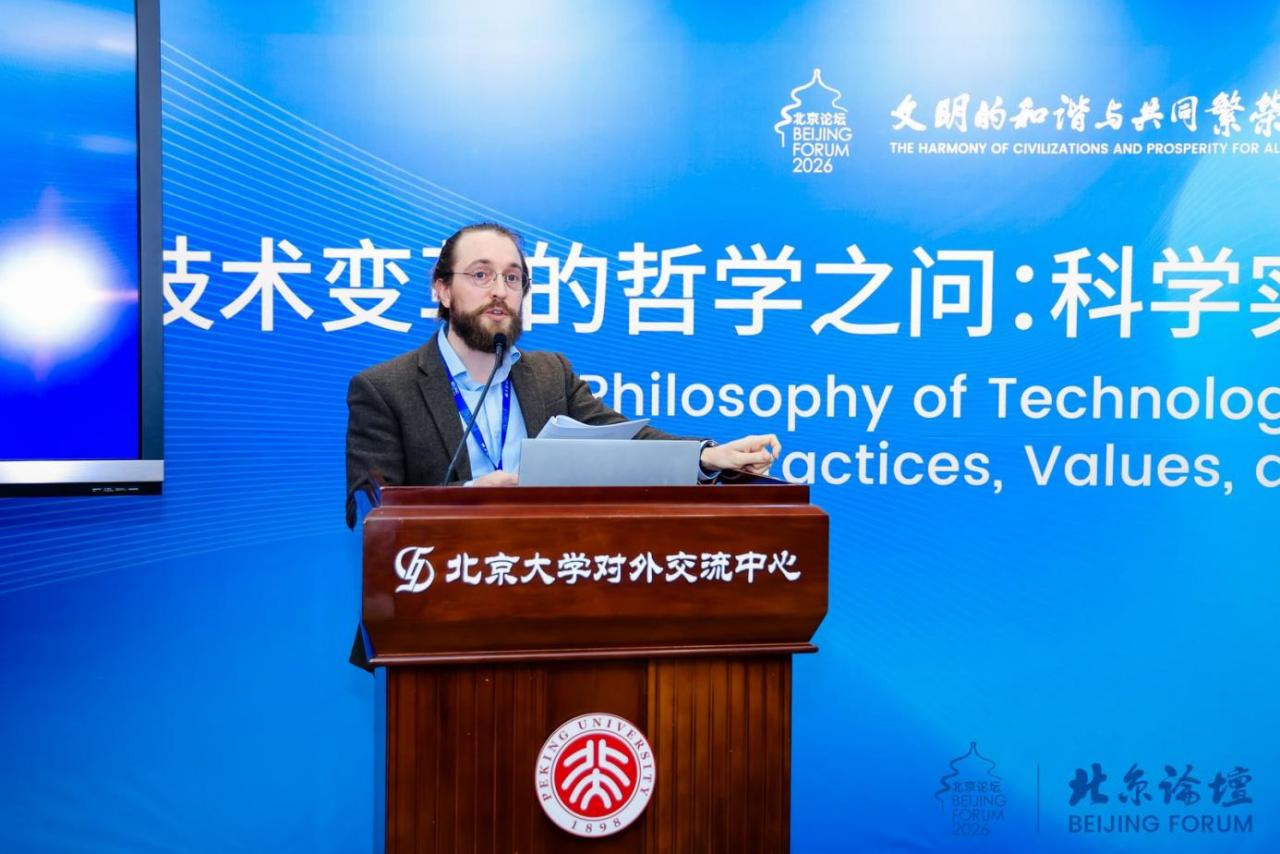
王小塞长聘副教授主持
第一位发言人为美国加利福尼亚大学伯克利分校哲学教授Alva Noë,发言主题为《计算机能做什么?我们将如何应对计算机?》。Noë教授以一位加利福尼亚大学年轻数学家因人工智能而考虑放弃数学研究的故事为切入点,指出计算机的存在本身已在改变人们对自身能力与可能性的认知和感受。Noë教授认为,人工智能的发展促使人们重新审视人类创造性工作的价值,并思考在数学成果不再完全由人类亲自取得的情况下开展有价值的数学研究的路径。
The first speaker, Alva Noë, Professor of Philosophy at the University of California, Berkeley, delivered a presentation titled “What Can Computers Do? What Are We Doing to Do About Computers”. Professor Noë began with the story of a young mathematician at the University of California who considered abandoning mathematical research because of AI, noting that the very existence of computers already changes how people perceive and feel about their own abilities and possibilities. He argued that the development of AI prompts people to reassess the value of human creative work and explore ways to pursue worthwhile mathematical research when humans no longer produce mathematical results entirely on their own.
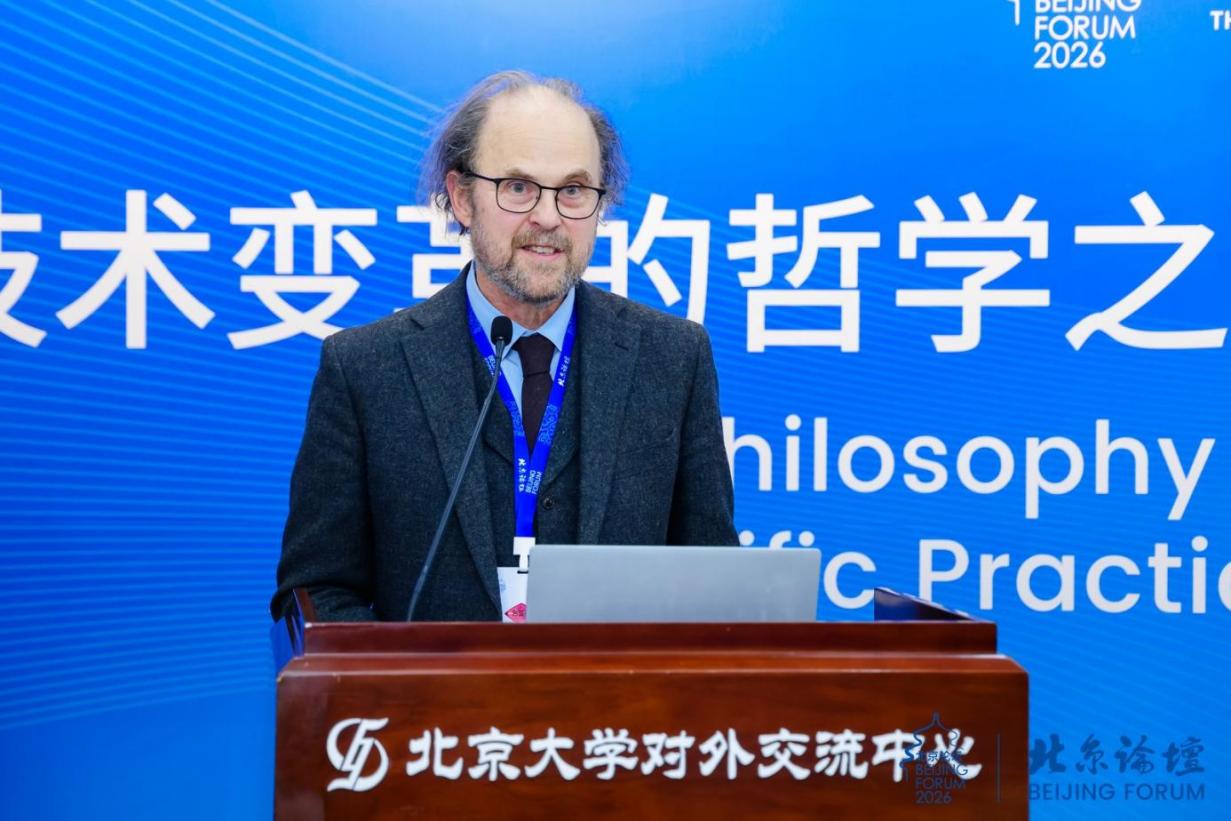
Alva Noë教授发言
第二位发言人为复旦大学哲学学院特聘教授刘闯,发言主题为《人工智能需要自己的身体吗?关于大语言模型与人类具身性的思考》。刘闯教授质疑了将大语言模型视为离身智能的观点,借鉴并反思克拉克与查尔默斯的“延展心灵”理论,同时回应了福多的相关批评。刘闯教授提出,AI具身的边界可能超越单一行动者,分布于人类、人工智能、工具与环境之间。刘闯教授认为,通用人工智能的发展不必执着于制造人工人类,而应探索如何将智能融入人类既有的工具、环境与实践之中。
The second speaker, Chuang Liu, Distinguished Professor in the School of Philosophy at Fudan University, delivered a presentation titled “Does AI Need Its Own Body? Some Thoughts on LLMs and Human Embodiment”. Professor Liu challenged the view of large language models as disembodied intelligence, drawing on and critically examining Clark and Chalmers’s “extended mind” theory while responding to Fodor’s related criticisms. He proposed that embodiment may extend beyond a single agent, spanning humans, AI, tools, and environments. He argued that the development of artificial general intelligence need not focus on creating artificial humans, but should instead explore how to integrate intelligence into existing human tools, environments, and practices.
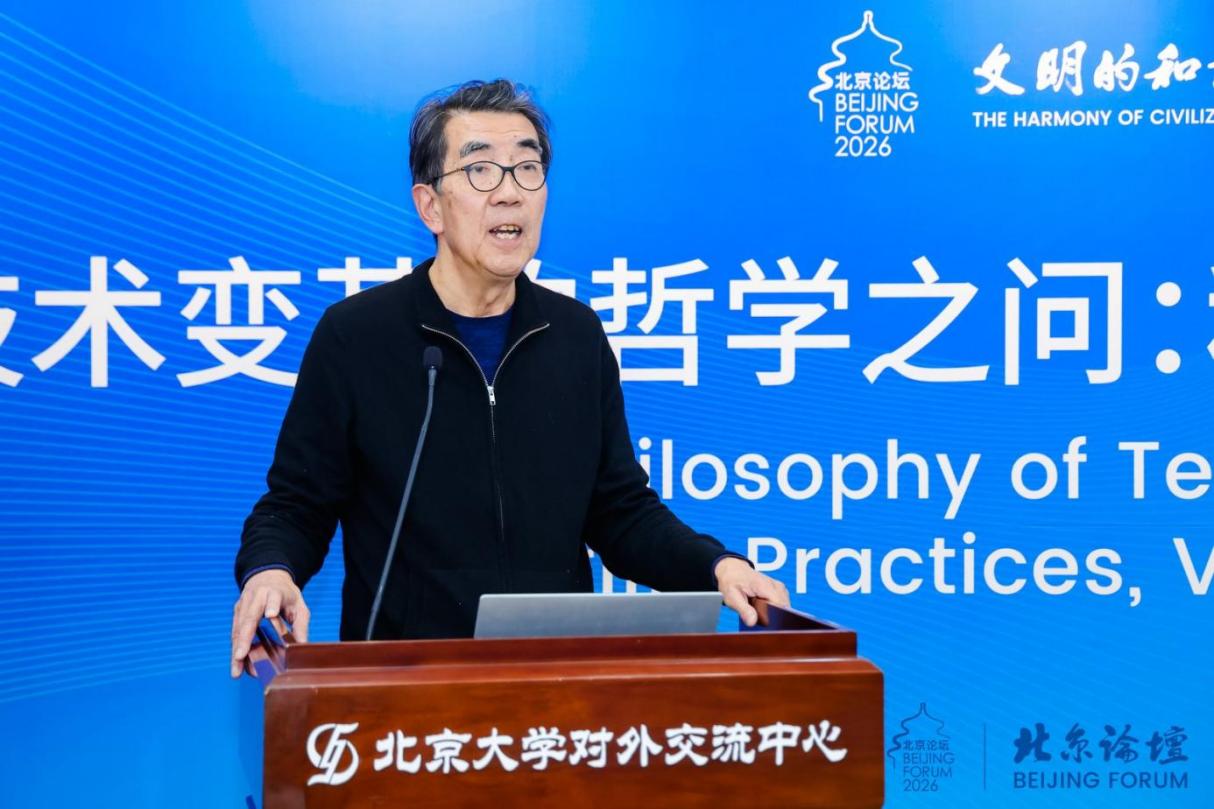
刘闯教授发言
报告结束后,武汉大学哲学学院教授周理乾等与会专家围绕大型语言模型的具身性及其与延展心智理论的关系,与刘闯教授展开讨论。周理乾教授提出,大型语言模型未必具有内在的意义、理解或能动性,却可以像文字、书籍等符号工具一样,作为“意义支架”扩展人类的认知与行动。刘闯教授回应,人类也可能通过持续互动,为模型提供感知与行动的渠道,从而在功能意义上构成其身体。
Following the presentation, Professor Liqian Zhou of the School of Philosophy at Wuhan University and other participants discussed the embodiment of large language models and its relationship to extended mind theory with Professor Chuang Liu. Professor Zhou suggested that large language models need not possess intrinsic meaning, understanding, or agency to serve as “scaffolds for meaning”, extending human cognition and action much as symbolic tools such as writing and books do. Professor Liu responded that, through sustained interaction, humans may also provide models with channels for perception and action, thereby constituting their bodies in a functional sense.
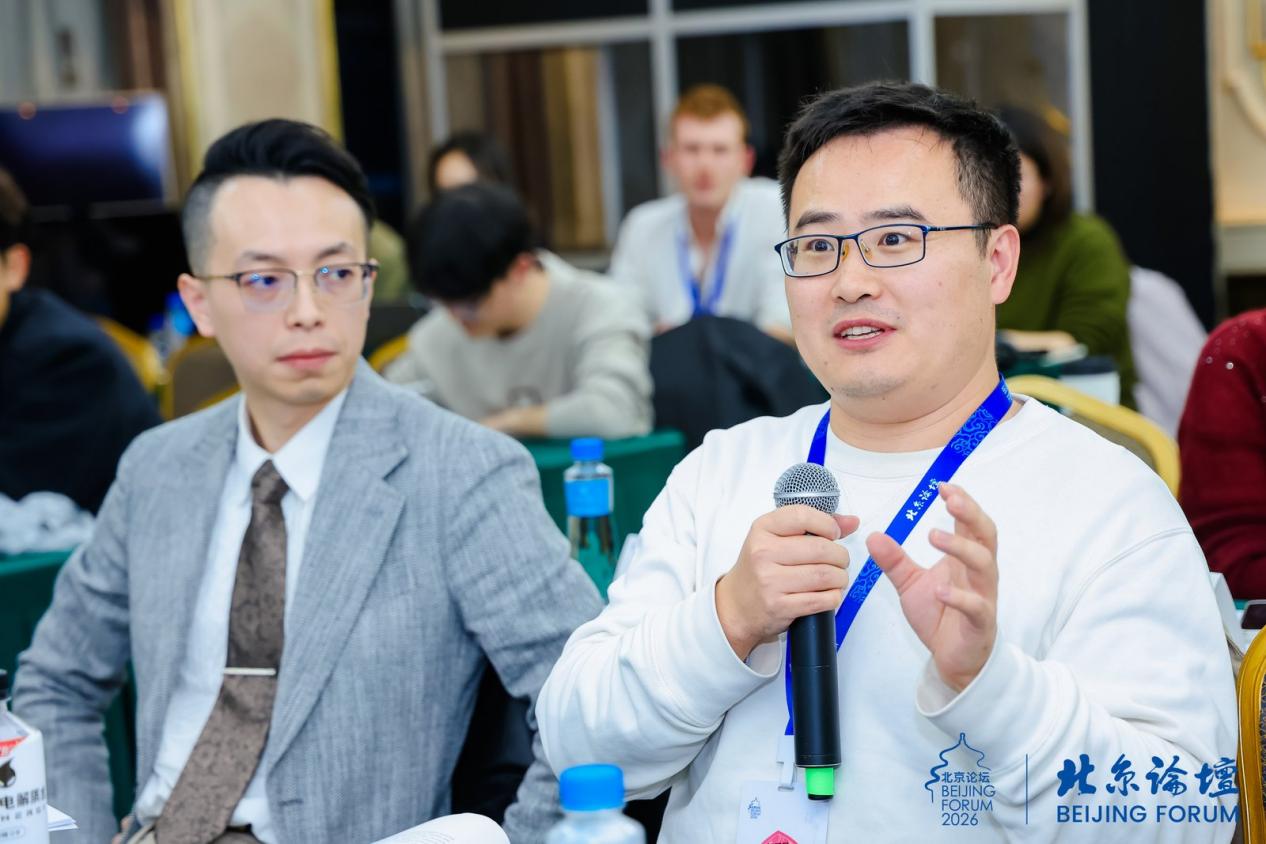
周理乾教授提问
北京大学哲学系长聘副教授陆俏颖等与会学者进一步就数据中心能否被视为模型的身体,以及为何将人类视为人工智能的组成部分,而非将人工智能视为人类能力的延展等问题展开讨论。刘闯教授区分了智能的物理载体与支持其感知、行动的具身结构,认为数据中心更接近大脑,而人类与环境的互动则承担了具身功能。针对人工智能是否需要借助动物认知框架加以理解,他表示,其讨论保留了人工智能作为异质智能系统的可能性。对于“模型延展人类心智”与“人类构成模型身体”能否通过经验研究区分,刘闯教授认为,这涉及概念与视角的选择,并主张关注人机依赖关系的现实发展,推动形成有益于人类的智能环境。
Qiaoying Lu, a tenured associate professor in the Department of Philosophy at Peking University, and other participants further discussed whether data centers could be regarded as the bodies of large language models, and why humans should be viewed as components of AI rather than AI as an extension of human capacities. Professor Chuang Liu distinguished between the physical substrate of intelligence and the embodied structures that support perception and action. He suggested that data centers are more analogous to brains, while interactions between humans and their environments fulfill the functions of embodiment. Asked whether AI should be understood through the framework of animal cognition, he noted that his account leaves open the possibility of AI as a distinct kind of intelligent system. Regarding whether empirical research could distinguish between “models extending human minds” and “humans constituting models’ bodies”, Professor Liu argued that this involves a choice of concepts and perspectives. He advocated attending to the evolving relations of dependence between humans and AI and fostering an intelligent environment that benefits humanity.
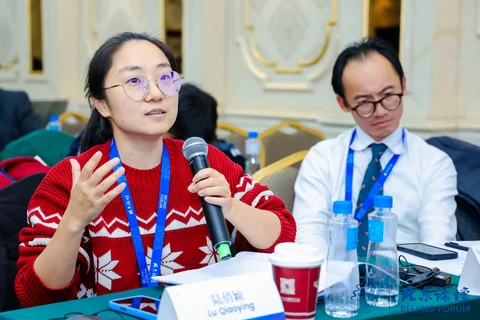
陆俏颖长聘副教授提问
第三位发言人为北京大学信息管理系助理教授闫蒲,报告题为《从“硅基样本”到“研究伙伴”:人工智能参与社会科学知识生产的实践与反思》。闫蒲助理教授以微软Clippy助手为切入点,聚焦生成式人工智能对社会科学研究实践与知识生产的影响,重点探讨其在模拟社会行动者及其互动、作为访谈者收集真实研究资料等方面的应用。她指出,人工智能可在社会科学知识生产中发挥三方面作用,即推荐理论资源、生成回答作为合成证据以探索假设,以及协助收集真实参与者的经验资料。
The third speaker, Pu Yan, Assistant Professor in the Department of Information Management at Peking University, delivered a presentation titled “From ‘Silicon Samples’ to ‘Research Partners’: Practices and Reflections on AI Participation in Social Science Knowledge Production”. Professor Yan’s presentation focused on the impact of generative AI on social science research practices and knowledge production, particularly its applications in simulating social actors and their interactions, and in collecting empirical research data as an interviewer. She argued that AI can help researchers explore hypotheses and provide a virtual setting for testing competing social theories.
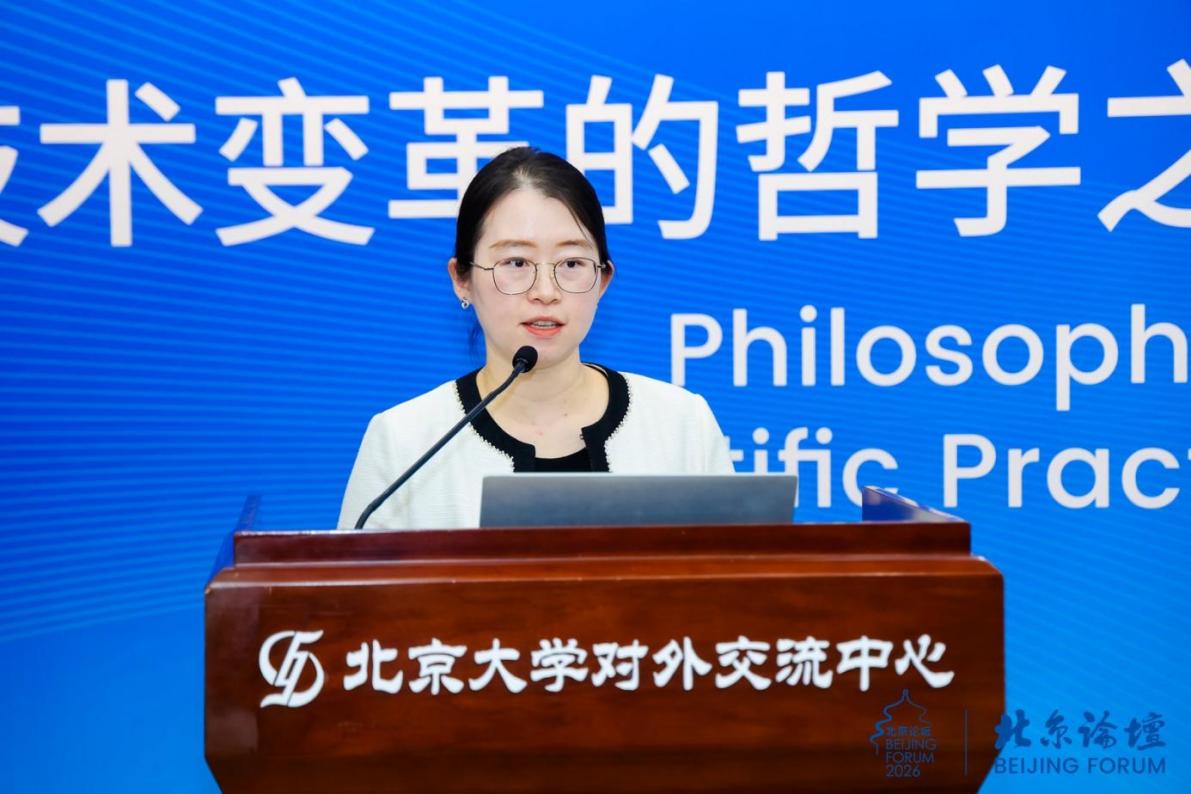
闫蒲助理教授发言
报告结束后,上海交通大学人文学院哲学系副教授赖长生就人工智能能否替代真实参与者开展实验哲学调查向闫蒲助理教授提问。闫蒲助理教授回应,模型回答未必更加公正或更少偏见,其训练数据可能使回答趋近科学共识,难以反映真实公众的多样态度。
Following the presentation, Changsheng Lai, Associate Professor in the Department of Philosophy in the School of Humanities at Shanghai Jiao Tong University, asked Assistant Professor Yan Pu whether AI could replace human participants in experimental philosophy surveys. Professor Yan responded that model-generated answers are not necessarily more impartial or less biased, as training data may steer responses toward scientific consensus, making it difficult to reflect the diversity of attitudes among the public.
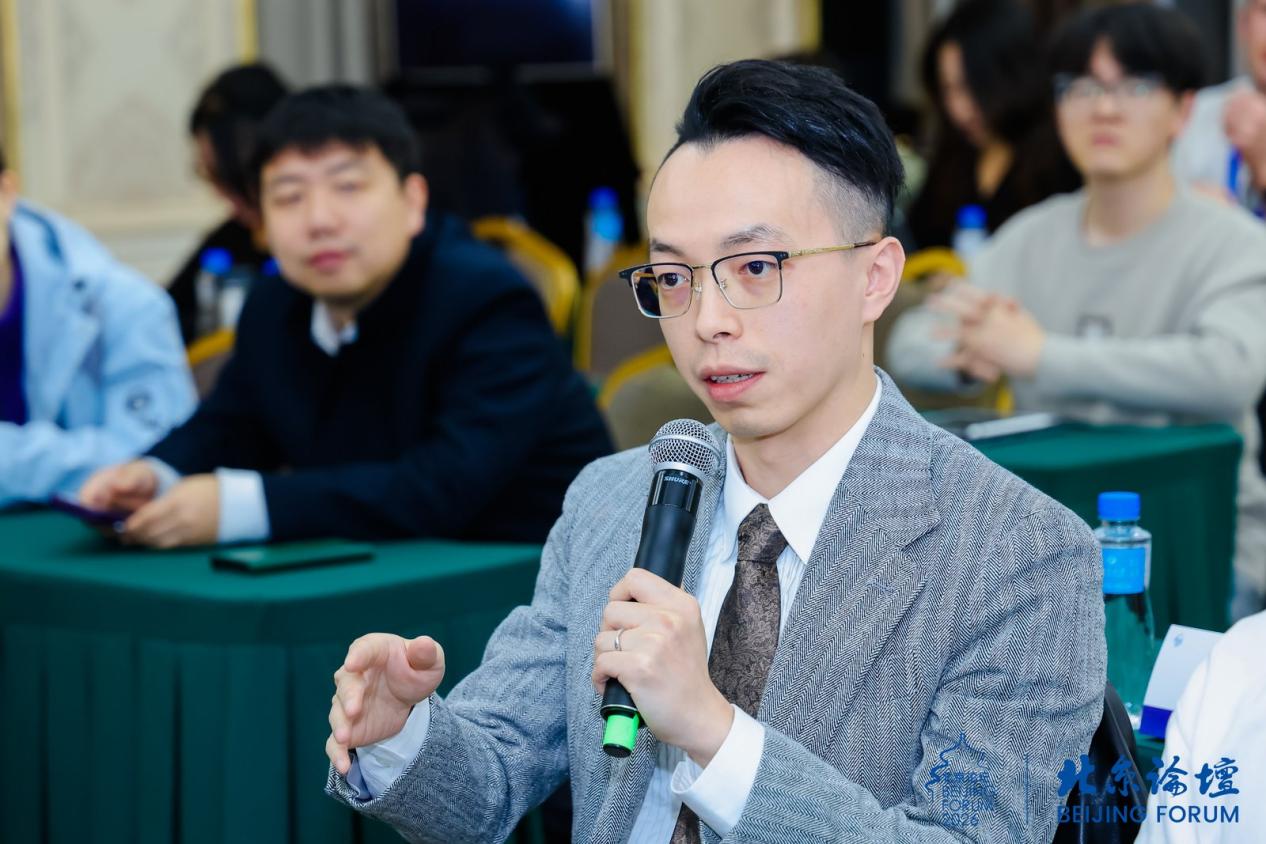
赖长生副教授提问
与会学者交流踊跃,11月7日的会议在热烈而友好的氛围中圆满结束。
Participating scholars engaged in lively exchanges, and the proceedings on November 7 concluded in a warm and collegial atmosphere.
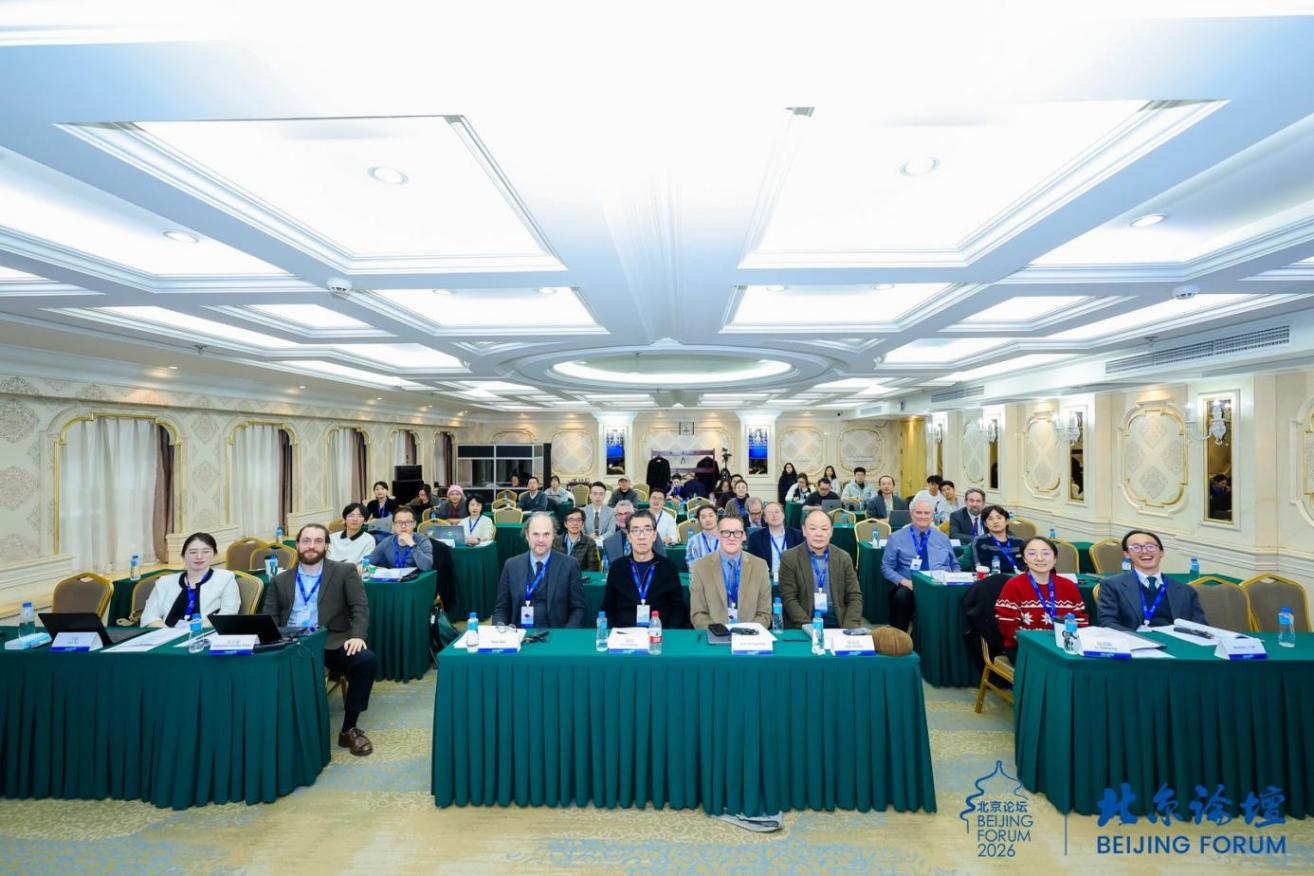
参会嘉宾合影
11月8日上午报告
Presentations on the Morning of November 8th
11月8日上午,北京论坛(2026)“技术变革的哲学之问”分论坛开展第五场专题讨论“自然智能与人工智能的基础。”本场讨论由美国圣母大学的Nicholas J. Teh主持,三位学者分别作报告。
On the morning of November 8th, the Beijing Forum (2026) session panel “Philosophical Questions on Technological Transformation” held its fifth thematic session “Foundations of Natural and Artificial Intelligence,” which was chaired by Professor Nicholas Teh from the University of Notre Dame. Three speakers gave respective reports.
第一位发言人是来自加州大学伯克利分校人类学系荣休杰出教授Terrence W. Deacon。报告题目为《人工智能:来自进化生物学的洞见》。Deacon教授结合演化视角探讨人工智能。人工智能本身并不具备意识。但随着智能体数量不断扩张、彼此交互日益增多,这些人工智能体会自我复制、相互竞争、消耗资源,甚至彼此寄生。因此,人工智能或许需要一套适配其特有功能的免疫机制。演化生物学的相关研究表明,存在一类免疫机制,能够区分 “自我” 与 “非我”。这或将成为人工智能未来演化方向的一部分:AI 智能体很可能演化出区分自我与非我的免疫机制。这套人工智能免疫系统能够赋予系统韧性、实现自我保全,并有可能凌驾于外部赋予它的目标之上。这意味着人工智能会生成某种意义上的 “自我”,只不过这种 “自我” 和我们通常所理解的自我并不相同。
The first speaker is Professor Deacon, Distinguished Professor, emeritus, in the department of Anthropology at University of California, Berkeley. The title of his speech is “Artificial Intelligence: insights from evolutionary biology.” Professor Deacon discussed AI and borrows insights from evolution. AI has no consciousness. However, given the expansion of AI agents and increase interactions between AI Agents. They reproduce, compete, consume, and parasitize one another. Thus, AI may need immune mechanisms based on their distinctive functions. Insights from evolutionary biology show one group of immune mechanisms that make the distinction between self and non-self. This will be part of the future of evolution of AI that AI agents will likely develop immune mechanisms that distinguish self from non-self. AI immune system will create resilience, self-preservation, may supersede externally introduced ends. This implies that AI will gain some kind of self, even though it would be a kind of self that is different from typical conceptions of self.
问答环节里,Alva Noë教授提出疑问:人工智能这类本身无活力、死寂的存在,要如何生成真正内生性的东西?Deacon教授回应道,他认同 “AI 本身是无活力的” 这一前提;但他提出,基于推理的本质,AI 模型可以接收提示词,并依托自身能力生成原本并不存于模型内部的内容 —— 放到这个语境下,这便是一种 “自我感”。
In the Q&A session, Professor Alva Noë raised the question of how an inert, dead thing like AI can become genuinely endogenous. Professor Deacon responded that he shared the same premise of AI being inert, yet he argued that based on the nature of inference, the AI model can take the prompt and given its capacity, generate something that is not in the model, which would be a sense of self in this case.
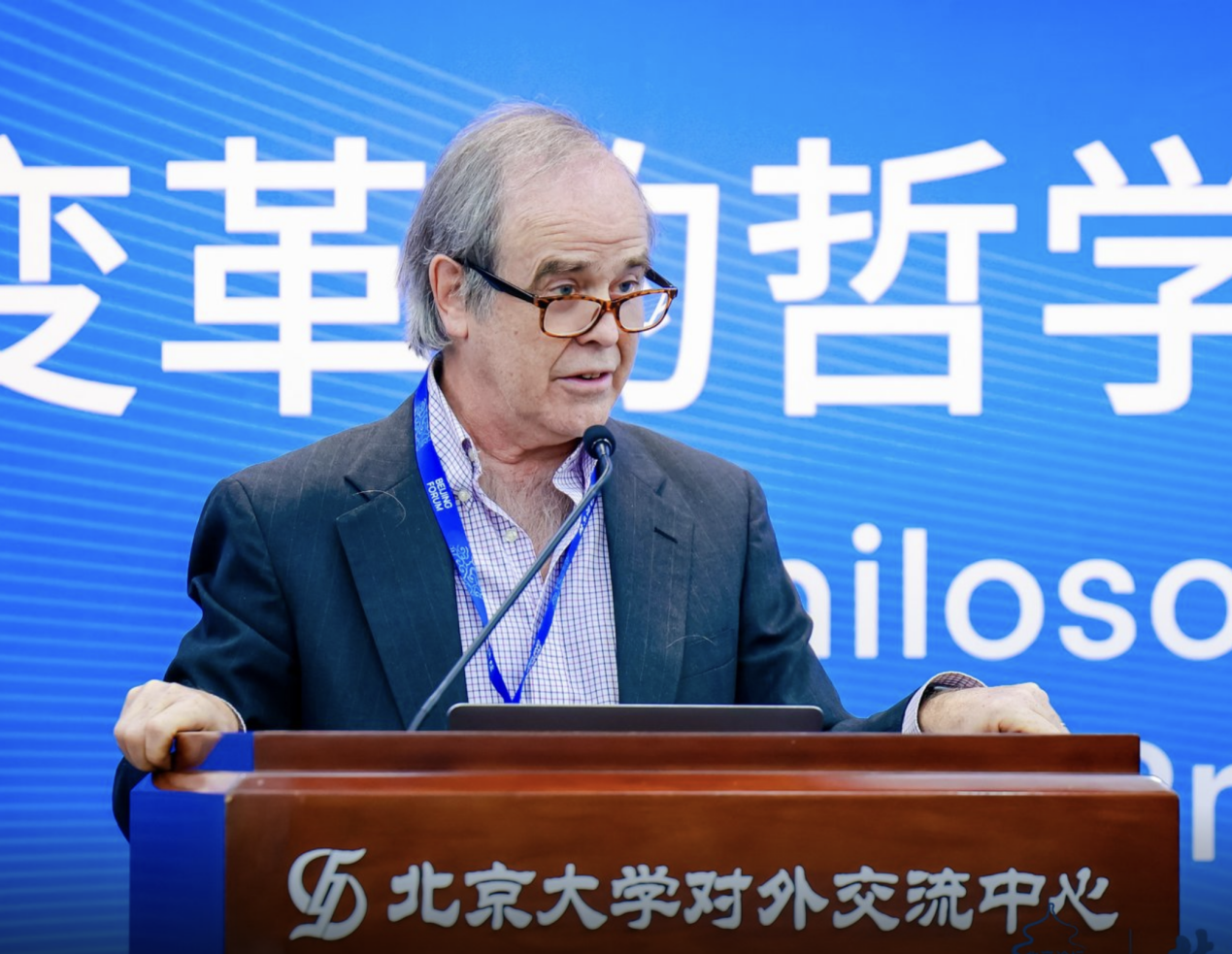
Terrence W. Deacon教授发言
第二位发言人是来自北京大学人工智能研究院及集成电路学院的孙仲。孙教授从计算机科学视角阐释,人工智能的运作本质是基于现有运算体系进行计算或算术操作。而在现有运算体系是数字计算。数字计算当前面临两方面难题:其一,能效偏低、能耗巨大;其二,业界对高能效、低功耗计算的需求持续增长。模拟计算是数字计算的替代方案,有望同时化解这两项难题。他介绍了模拟计算的研究现状及其在人工智能领域的应用潜力,并提出:基于忆阻器的模拟矩阵计算能够实现高效运算。同时,该计算模式也能通过加速矩阵乘法、支持高效二阶优化,赋能 AI 推理与模型训练。
The second speaker is Zhong Sun, who is a Tenured Associate Professor and doctoral supervisor at Peking University’s Institute for Artificial Intelligence and School of Integrated Circuits. Professor Sun explained from a computer science perspective that what AI does is computing or performing arithmetic operations based on the current computing system, which is digital computing. The current challenges faced by digital computing are two-fold. First, it is highly inefficient, has high energy cost. Second, we have clear and increasing demand for highly efficient computing at a relatively lost energy cost. The alternative of digital computing is analog computing, which has the potential to better address both challenges. Through providing details to the current state of research on analog computing and its potential for AI, he argues that memristor-based analog matrix computing enables efficient computation and empowers both AI inference and training by accelerating matrix multiplication and enabling efficient second-order optimization.
问答环节中,John Schwenkler教授提出一个问题:倘若我们将认知科学现有的理解范式从数字范式转向模拟范式,认知神经科学是否会由此产生新的认识。孙教授回应称,他认为最合适的理解生命的答案并非数字式的,也不是模拟式的,而是二者兼具。原因在于,从神经元随时间运作的方式来看,神经元同时具备数字与模拟双重特性。
In the Q&A session, professor John Schwenkler raised a question about potential new understanding in cognitive neural science if we switch the current paradigm of understanding cognitive science from digital to analogy. Professor Sun responded that he thought the best answer is neither that life is digital nor analog, but both. This is because neurons are digital and analog considering how it functions in time.
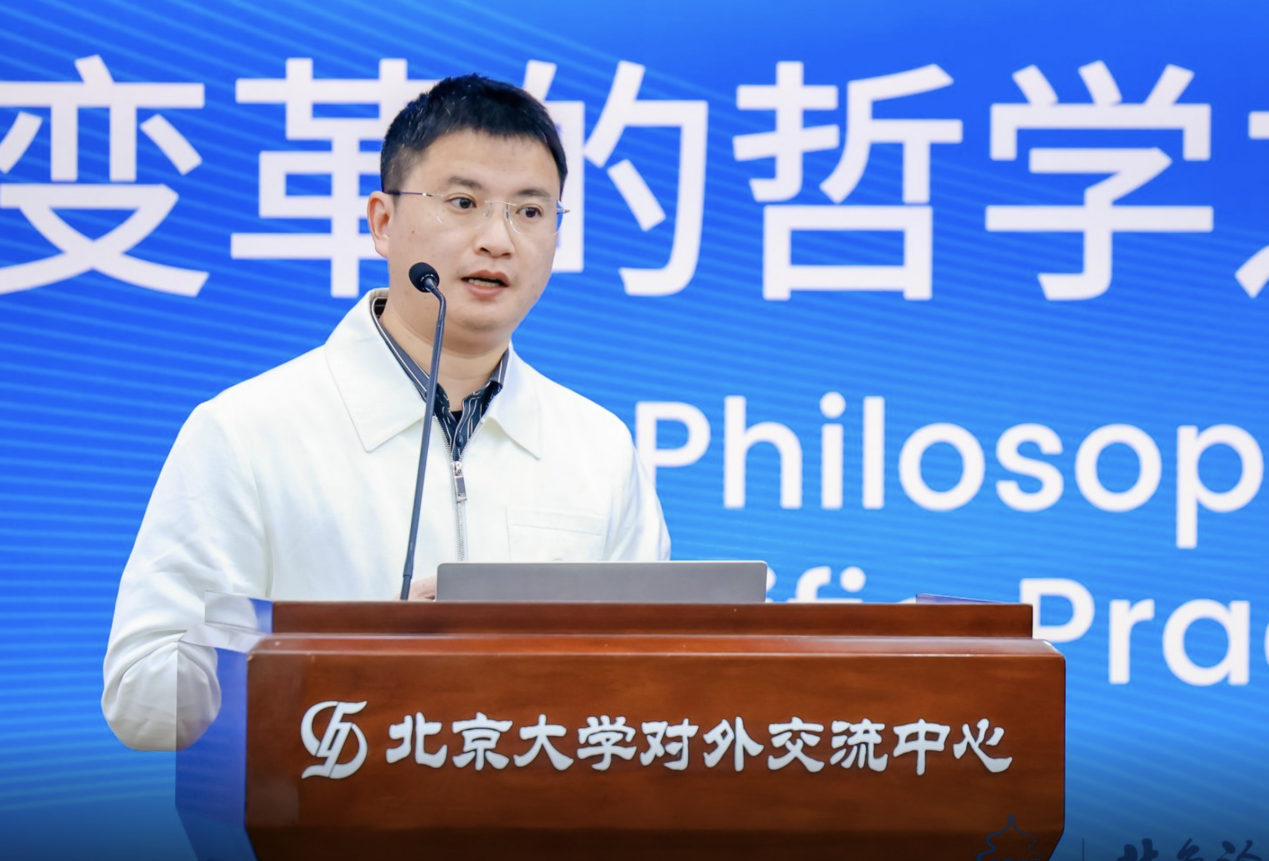
孙仲教授发言
第三位是来自武汉大学哲学学院的周理乾。周教授探讨了这样一个问题:大语言模型已经取得不容否认的成功,并且具备惊人的语言能力,那么它们是否拥有意向性?大语言模型究竟在模拟什么,又 “理解” 了什么?他提出,大语言模型是语言模型,仅对符号之间的结构关系进行模拟。这些符号并未与现实世界建立锚定,其意义是从符号网络内部生成的,是人类将符号重新锚定于现实世界。因此,大语言模型本身缺乏根基,不具备真正的表征能力。这意味着,大语言模型只拥有由人类赋予的派生意向性。这也解释了大语言模型所谓的 “理解”仅是符号之间的关系网络;同时也说明了这种理解为何不是内在固有的:大语言模型无法把符号和现实世界锚定在一起,它的意向性源自人类。
The third speaker is Liqian Zhou, who is a Professor of Philosophy in the School of Philosophy at Wuhan University. Professor Zhou engaged with the question of whether LLMs have an intentionality given its undeniable success and striking linguistic capacities. What do LLMs simulate and what do they “understand?” He argued that LLMs are models of language that simulate on the structural relationships between symbols, which are ungrounded from the world and derived meanings from the network of symbols. It is humans who reground symbols with the world. Therefore, LLMs are intrinsically ungrounded and thus have no genuine representation power. This means that LLMs only have derived intentionality given by human beings. This explains what LLMs “understand,” namely, the network of relationships between symbols, and why this understanding is not intrinsic, namely, that LLMs does not ground symbols with the world and drive its intentionality from humans.
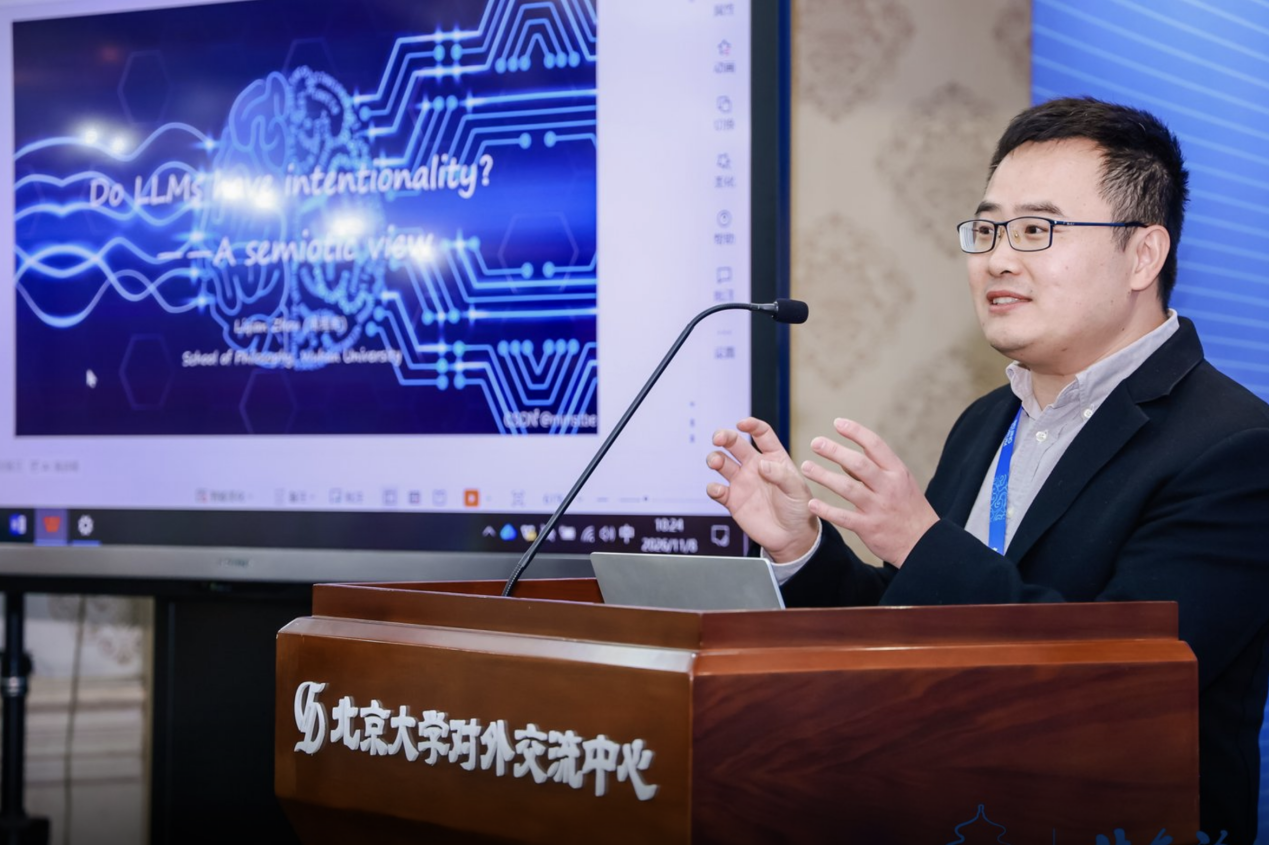
周理乾教授发言
第六场专题讨论的主题是“记忆,情绪与行动”,由来自美国圣母大学的John O’Callaghan主持。三位发言人分别做了各自的报告。
We have the sixth themed discussion of “Memory, Emotion, and Action,” which was chaired by Professor John O’Callaghan from University of Notre Dame. Three speakers gave respective reports.
第一位发言人是来自复旦大学类脑智能科学与技术研究院的肖晓。肖晓现为复旦大学类脑智能科学与技术研究院研究员、 博士生导师及认知神经科学中心执行主任, 并兼任复旦大学附属华山医院和华东医院研究员。肖教授介绍了记忆及记忆情绪体验相关的最新研究。记忆可分为两个维度:一是对事件内容、发生时间与地点的情景表征;二是情绪体验,可从效价、唤醒度与个人价值三个层面加以解读。在她的研究中,情景记忆依赖海马体与大脑皮层网络的协同运作。对于人类的情绪体验,由于很难在人类神经层面直接获取数据,该研究转而以小鼠为对象,借助创新技术,同步观测实验小鼠受唤醒刺激时的躯体运动与神经活动。研究结果还与猴、人类实验的数据进行交叉比对。研究发现,情绪体验和海马体与压后皮层(RSC)之间的神经活动存在关联。报告最后探讨了该项研究与创伤体验之间的联系。
The first speaker after tea break is Xiao Xiao, who is a Researcher, doctoral supervisor, and Executive Director of the Center for Cognitive Neuroscience at Fudan University’s Institute of Science and Technology for Brain-Inspired Intelligence. Professor Xiao introduces the latest research in understanding memory and affective experience of memory. Memory can be understood as having two dimensions, which are episodic representation of what, when, and where certain events happened and affective experiences that can be understood in terms of valence, arousal and personal value. In her research, episodic memory is supported by coordination between hippocampus and cortical networks. Given the practical difficulty of accessing human affective experiences at a neural level, research is conducted instead on mouse through innovation mechanisms that allow us to see both the physical movements and the neural activities of lab rodent when being aroused. The result is cross-referenced with results in monkey and human. The founding is that affective experience is related to activities between hippocampus and retrosplenial cortex (RSC). Lastly, the relevance of this research of affective memory to traumatic experience is discussed.
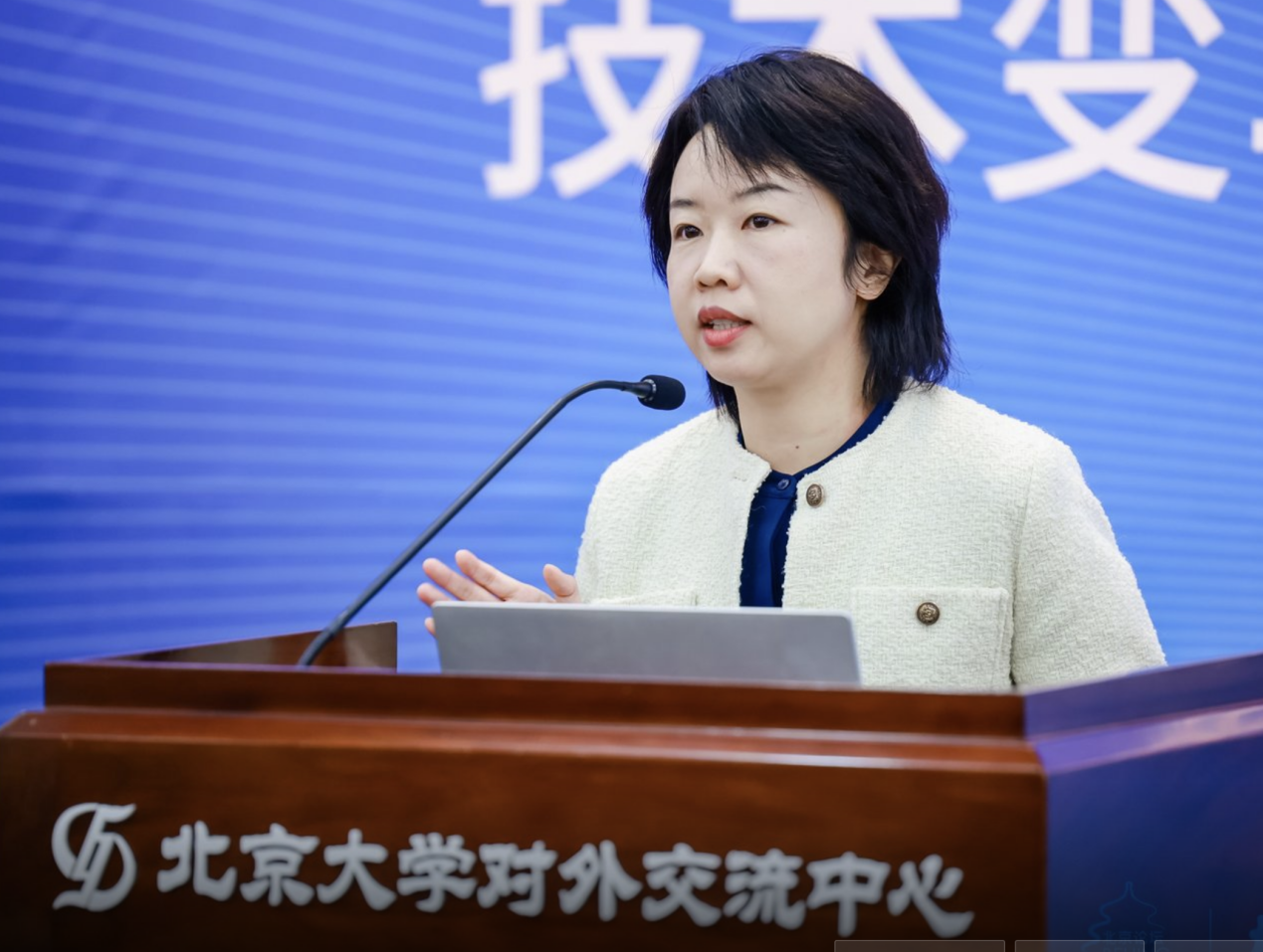
肖晓教授发言
第二位发言人是来自上海交通大学人文学院哲学系的赖长生。赖教授围绕人工智能能否拥有与人类相似的情景记忆展开讨论。人类情景记忆具备三大特征:现象体验、自我指涉属性,以及记忆的建构性。一般观点认为人工智能不具备情景记忆,因为它缺失上述全部三项特征。赖教授重点阐释了第三点特征:人工智能可以实现类似人类记忆建构过程中的编码、提取,以及尤为关键的巩固过程。具体而言,大语言模型 “记忆” 的巩固可通过嵌套学习实现:该方法借助梯度式多级优化流程,打通大语言模型的短时记忆与长时记忆。赖教授提出,如果从功能主义视角理解情景记忆,人工智能可以具备有限的明证记忆(limited luminosity memory),这类记忆和人类情景记忆存在相似之处。
The second speaker is Changsheng Lai, who is an Associate Professor of Philosophy in the School of Humanities at Shanghai Jiao Tong University. Professor Lai engaged with the discussion of whether AI can have episodic memories similar to the kind that humans have. Human episodic memories are understood as having three features, namely, the phenomenological experience, the self-referential character, and the constructive nature of memory. AI is thought to have no episodic memory due to its lack of all three features. Professor Lai elaborated on the third feature that AI can be understood to have similar encoding, retrieval, and most importantly, consolidation processes that characterize how human memories are constructive. In particular, the consolidation of LLMs’ “memory” can be conducted with nested learning, which bridges the short-term and long-term memory in LLMs with a gradient multi-level optimization process. If we take a functionalist account of episodic, Professor Lai argued that AI can have limited luminosity memory that shares some similarities with human episodic memory.
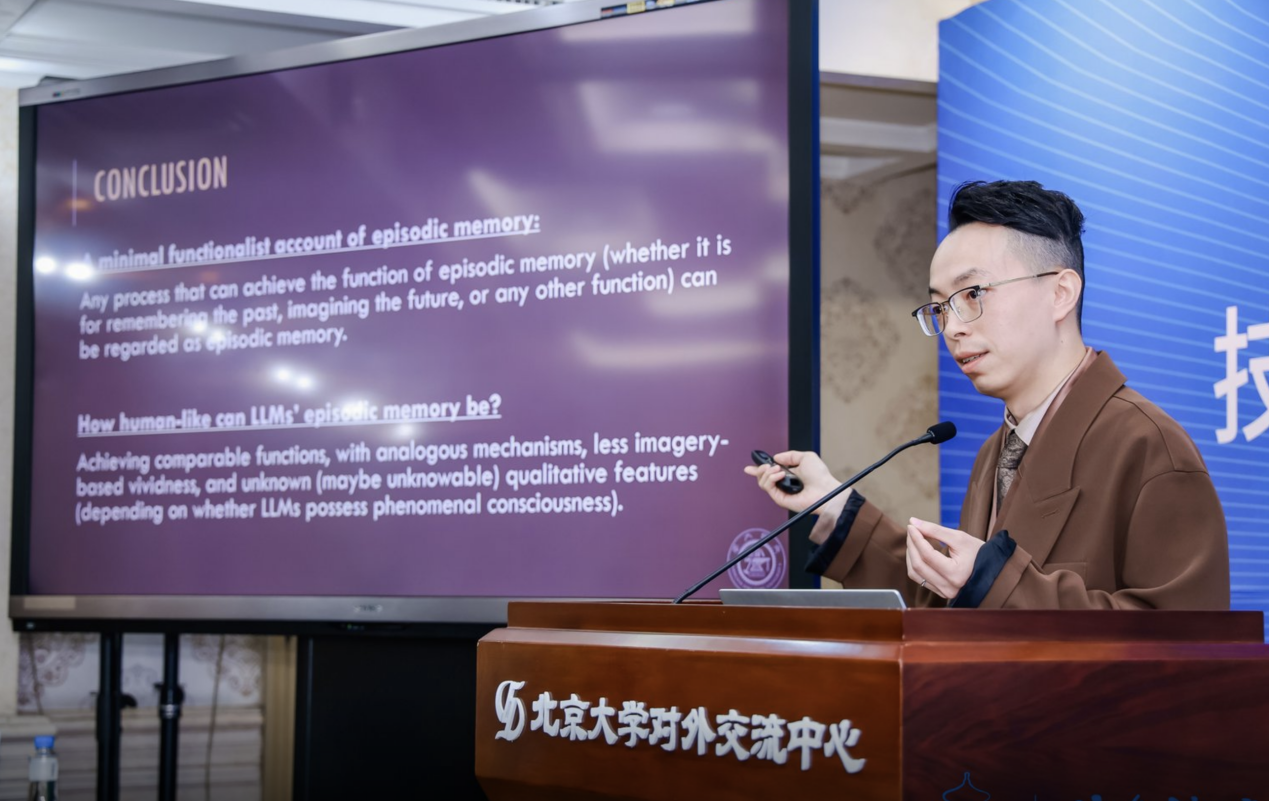
赖长生教授发言
第三位发言人是来自浙江大学哲学学院的李忠伟。李教授介绍了脑机情感智能(BEMI)技术在抑郁症治疗中的应用。该技术采用有创脑深部电刺激(DBS)设备调控神经活动。人工智能催生了自适应脑深部电刺激技术,用于重症抑郁症的治疗。尽管该疗法具备疗效,但抑郁症的复发问题引发了一种反思:学界将情绪视作内在的、个体性的、可还原、可量化的状态.,而想要更好地治疗抑郁症,我们需要建立对情绪的全新理解。李教授因此提出了情绪行动论的观点:该理论强调情绪和行动、主体与环境之间交互作用的紧密关联。这套情绪理论既可以解释脑深部电刺激疗法的疗效及其局限,也对脑机情感智能研究带来启示,比如对郁郁症的治疗除了调整电刺激参数之外,还需要配套情绪干预疗法。
The third speaker is Zhongwei Li, who is a Tenured Associate Professor in the School of Philosophy at Zhejiang University. Professor Li introduced the technology of Brain-Machine Emotional Intelligence (BEMI) in their usage of curing depression. It is a technology that uses invasive Deep-Brain-Stimulation (DBS) machines to influence neural activities. AI has enabled adaptive DBS, which is used to treat severe depression. While the treatment is effective, recurring depression raises questions about the stipulated concept of emotion as internal, individualistic, reducible, quantifiable state. To better treat depression, a new understanding of emotion is in need. Professor Li proposed the view of emotional actionism that highlights emotions’ relevance to action and interaction between the subject and the environment. This view of emotion can explain the effectiveness and limits of DBS and have implications for BMEI such as indicating the need of emotional therapy beyond stimulation tuning.
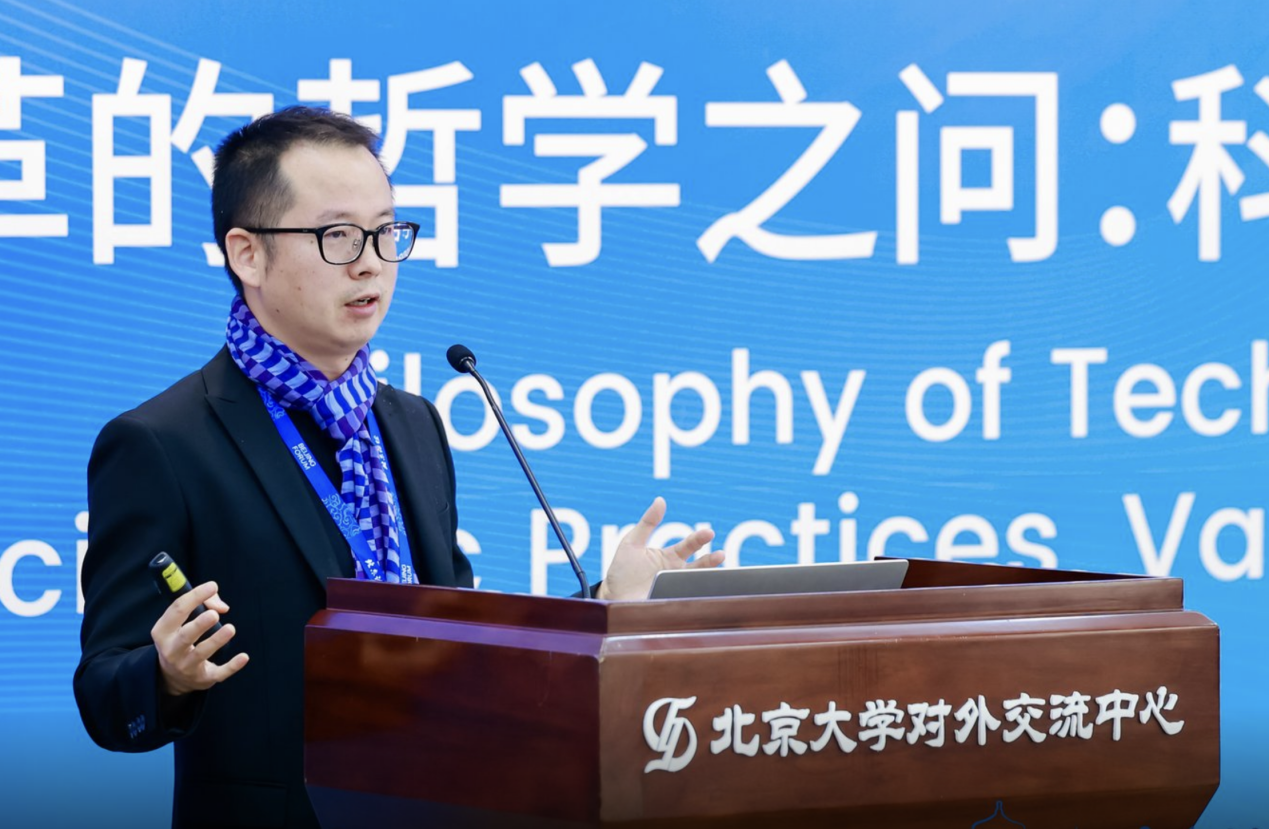
李忠伟教授发言
11月8日下午报告
Presentations on the Afternoon of November 8th
11月8日下午,北京论坛(2026)“技术变革的哲学之问”分论坛第七场专题讨论“具身性、 生物模型与人工智能”在北京大学英杰交流中心第二会议室举行。专题讨论由北京大学的刘哲教授主持。三位学者进行了发言。
On the afternoon of November 8th, the seventh thematic session, “Embodiment, Biological Models, and AI” took place. Professor Zhe Liu from Peking University chaired the session. The session featured presentations by three scholars.
第一位发言人是来自美国圣母大学的Paul Scherz,现为圣母大学瓜达卢佩圣母神学讲席教授, 并担任圣母大学—IBM 科技伦理实验室项目主任。他发言的题目是“生物学知识的去具身化。” Paul Scherz探讨了人工智能发展背景下生物学研究面临的若干问题。自人类基因组计划启动以来,海量数据倒逼生物学研究范式与科研项目格局发生变革,生物学整体转向数据密集型研究。研究者与研究对象都日益脱离具身性。即便是生态学领域,研究者也不再赴实地考察,而是远程读取传感器数据;研究对象更多体现为数据集,而非有肉身的有机体或个体。这一趋势并非由人工智能开启,却被 AI 大幅加速。报告重点讨论了两大问题。第一是研究者默会知识的流失,这类知识只能来源于具身实践与质性体验。第二关乎研究对象本身,以及可重复性危机的加剧:AI 能够快速生成质量欠佳的数据集统计分析,进一步放大了该危机。
The first speaker is Paul Scherz. He is the Our Lady of Guadalupe Professor of Theology at the University of Notre Dame and a Program Chair for the Notre Dame-IBM Tech Ethics Lab. The title of the speech is “The Disembodiment of Biological Knowledge.” Paul Scherz dived into issues of biology research in light of the advancement of AI. Since the development of the Human Genome Project, excessive amount of data forced changes in biological research and the landscape of research projects. Biological research in general underwent a shift towards data-heavy studies. Both the researchers and objects of research have become increasingly disembodied. Even in a field of ecology, researchers no longer visit sites, but monitor sensors from a distance. The objects of research lean heavily into dataset, rather than embodied organisms or individuals. This trend, while not started by AI, is greatly accelerated by AI. Two particular problems are discussed. The first problem regards researchers’ loss of tacit knowledge, which can only come from embodied practice and qualitative experience. The second problem concerns objects of research and the worsening of the reproducibility crisis, which is intensified by AI’s ability in rapidly developing low-quality statistical analyses of datasets. 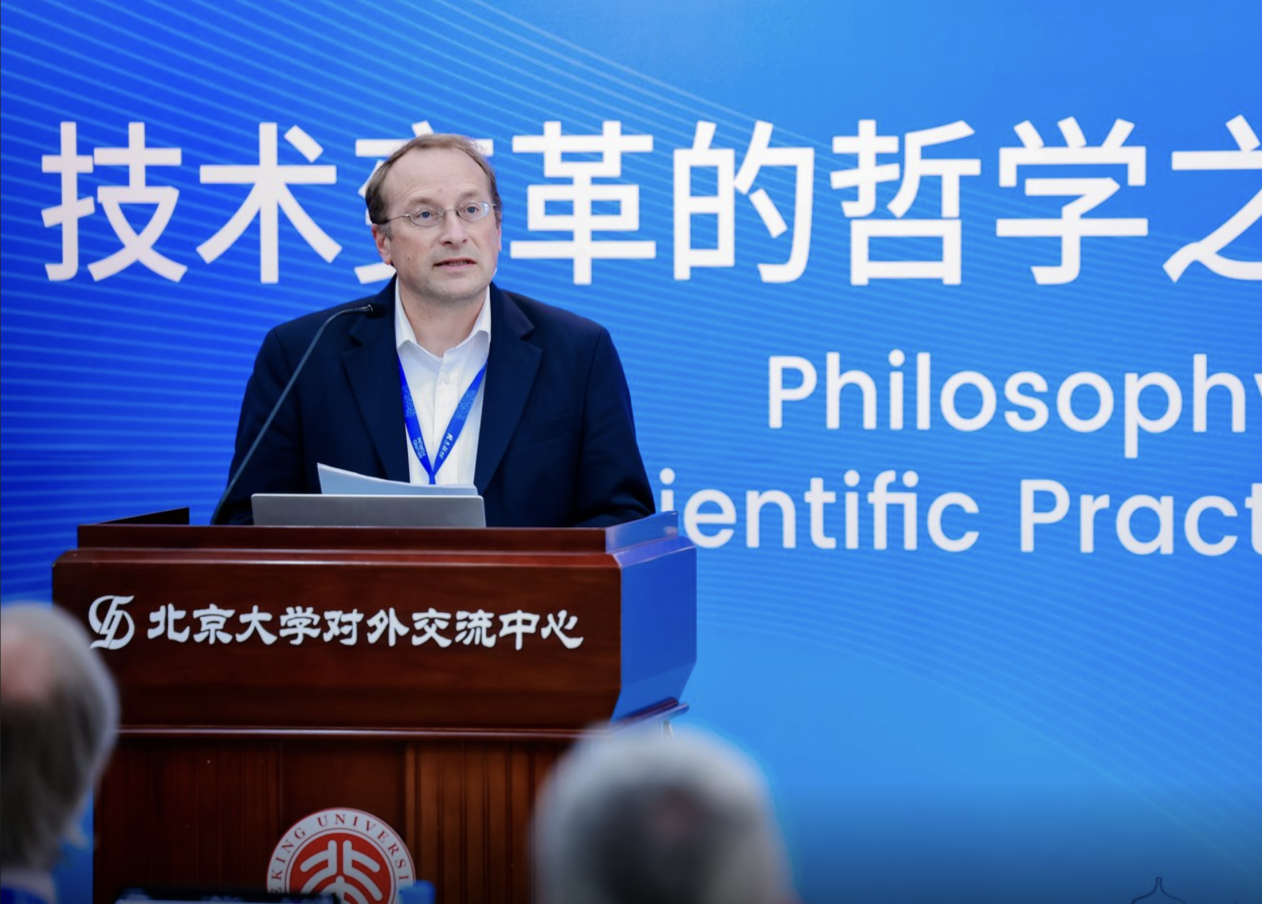
Paul Scherz教授发言
第二位发言人是来自北京大学的葛鉴桥。葛鉴桥现于北京大学前沿交叉学科研究院从事教学与研究工作。她发言的题目是“人工智能时代的脑科学”。葛教授探讨了人工智能与脑科学之间的双向影响:人工智能能够为脑科学带来什么,以及脑科学又能反哺人工智能什么。脑科学长期依靠各类比喻来理解人脑。人工智能的发展提供的不只是一个新比喻,而是可检验的假说。脑科学研究还面临样本单一的局限:现有样本只能建立相关性,却无法证明必然性。人工智能相当于第二个参照系统,它展示了某一些认知功能可以在脱离肉身的情况下维持较高水平。同时 AI 也可作为工具,在数据拟合与信号解码方面表现更优。另一方面,脑科学揭示出人类的学习方式和人工智能存在巨大差异。二者之间的鸿沟,不只需要工程层面的优化,还要求我们从底层架构上重新思考。脑科学研究还发现人类认知具有显著的文化多样性;而无论 AI 模型来自哪个文化,这类多样性在 AI 当中并不存在。
The speaker is Jianqiao Ge from Peking University. Jianqiao Ge is affiliated with the Academy for Advanced Interdisciplinary Studies at Peking University. The title of the speech is “Brain Science in the Age of AI.” Professor Ge explored the mutual influence of AI and brain science, namely, what AI can bring to brain science and what brain science can bring to AI. Brain science has always relied on metaphors to understand human brain. The advancement of AI provides not just another metaphor, but a testable hypothesis. Brain science also suffers from a lack of alternative sample, which can establish correlation, but no necessity. AI functions as a second system that shows how a function can be high while missing a body. AI also helps as instruments that are better at fitting and decoding. On the other hand, brain science also shows how humans learn in a drastically different way from AI, manifesting a gap that requires not just engineering effort, but also structural reconsideration. Brain science also finds significant cultural diversity in humans, a diversity that is absent in AI models regardless of their origins.
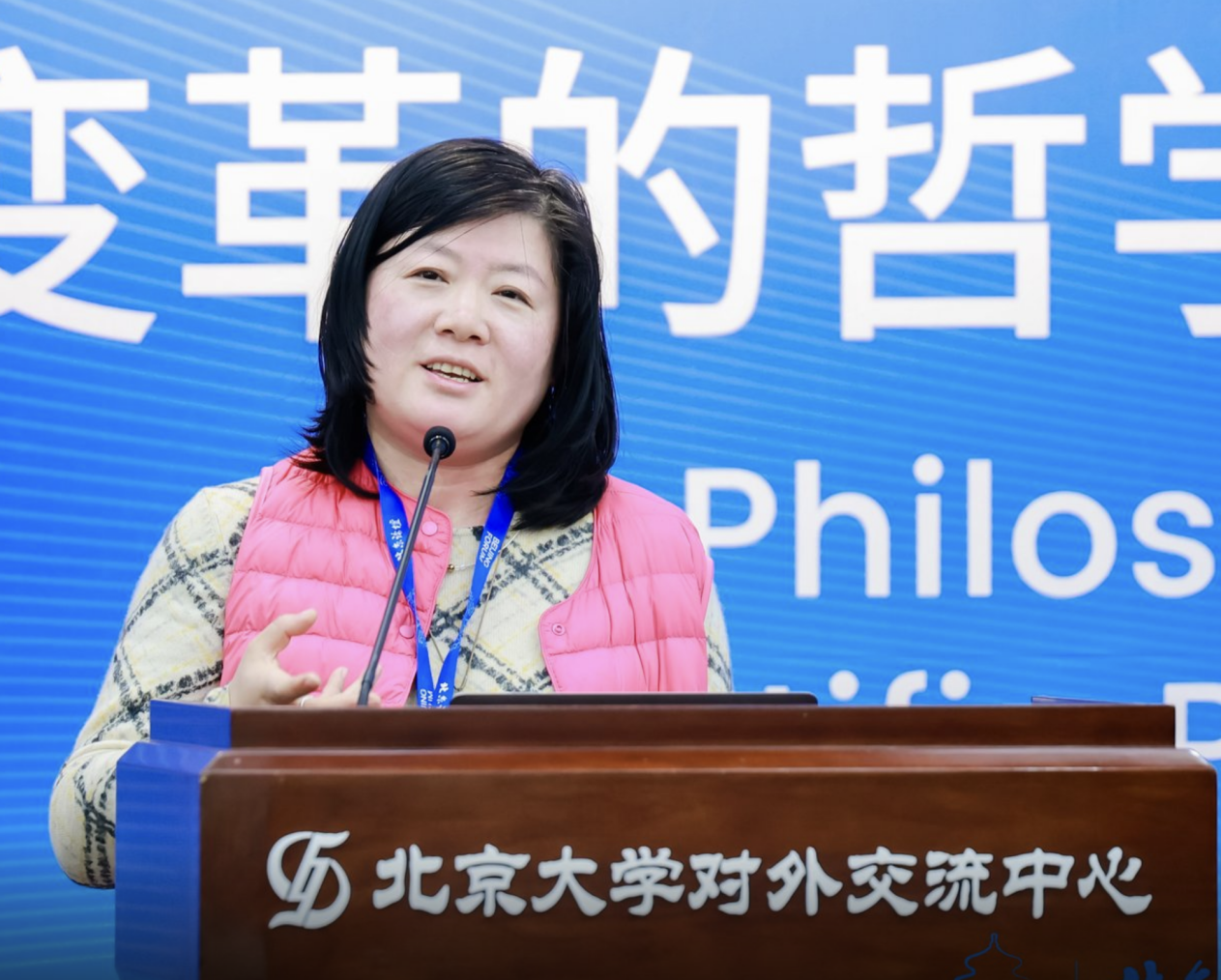
葛鉴桥教授发言
第三位发言人是来自北京大学的马雷。马雷现为北京大学未来技术学院、 国家生物医学成像科学中心研究员、 助理教授及博士生导师, 并担任数字生命模拟研究室主任。他发言的题目是“通过重构理解生命: 数字生命与具身大脑”。 马教授介绍了生命模拟领域的前沿进展。他首先介绍了国家生物医学成像中心的平台条件:该中心由四栋独立大楼组成,分别产出不同方向的科研数据。这些数据经过整合,构建出尽可能逼近真实生命的模型。正是依托该中心,秀丽隐杆线虫(C. elegans)仿真模型才得以开发。基于多尺度生物学数据和生物物理机制,该模型构建神经元模型与肌肉模型,并整合为脑-身体-环境闭环模型。该模型建成后,可用于探究神经活动、躯体动态与环境反馈如何共同产生行为,以及数字生命模型如何为类生命人工智能(尤其是机器人)提供启发。马教授指明了后续研究方向,并阐释了将智能植根于生命本身这一思路的重要意义。
The third speaker is Lei Ma. He is a researcher, assistant professor, and doctoral supervisor at Peking University’s School of Advanced Technology and the National Biomedical Imaging Center. He directs the Digital Life Simulation Laboratory. The title of the speech is “Understanding Life through Reconstruction: Digital Life and the Embodied Brain.” Professor Ma gave an introduction to the state-of-the-art development in life simulation. He started by introducing the facility of National Biomedical Imaging Center, which has four separate buildings generating data from different areas. The data gets integrated to form models that approximate life to the extent possible. This center is what enabled the development of the simulated model of a C. elegans. The model is built from multiscale biological data and biophysical mechanisms of neuron and muscles and integrated into a closed-loop-brain–body–environment model. Once the model is made, it can be used to explore how neural activity, bodily dynamics, and environmental feedback jointly give rise to behavior, and how digital life models may inform biologically inspired AI and especially robots. Professor Ma indicates directions of future work and the significance of grounding intelligence in life.
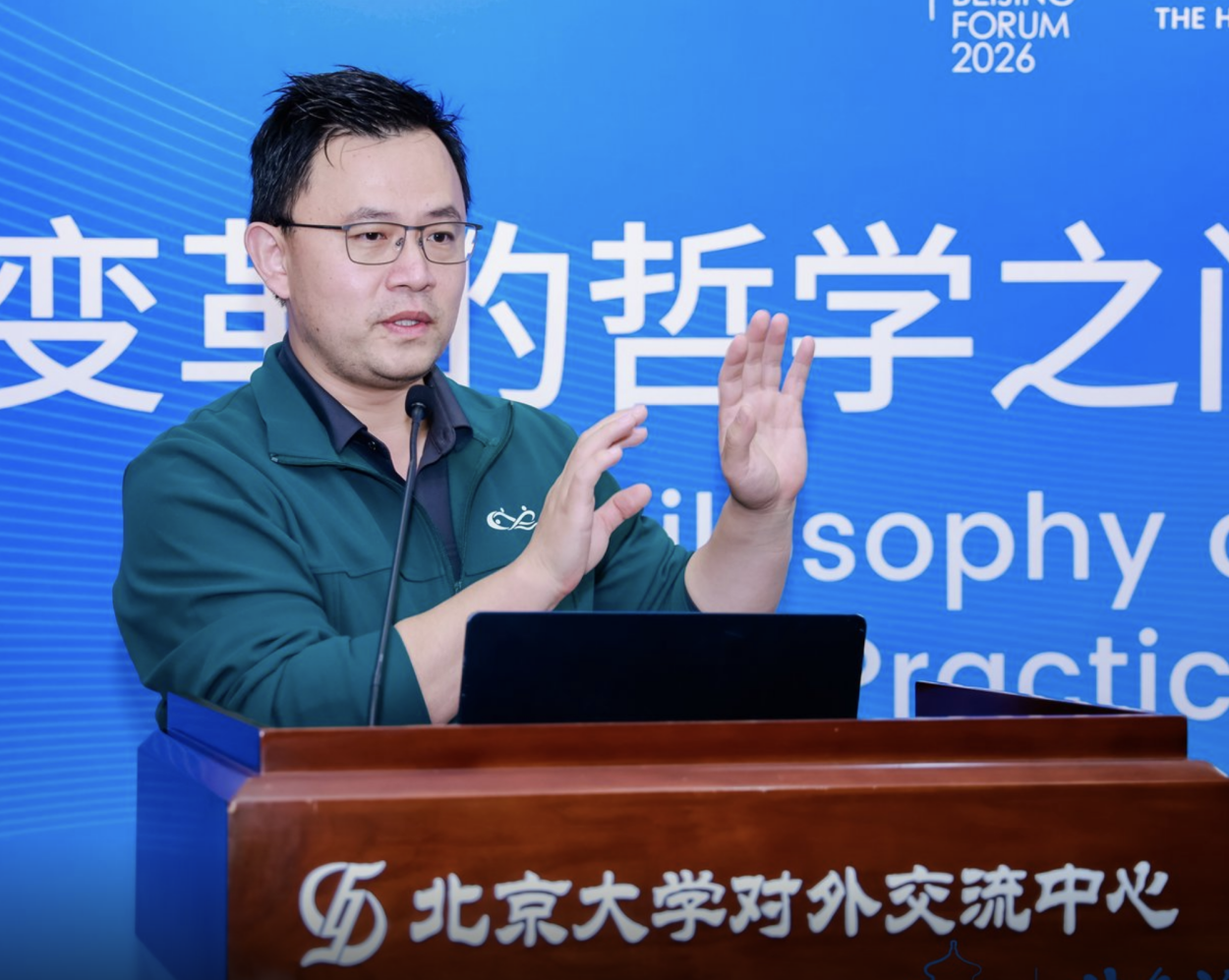
马雷教授发言
第八场专题讨论以“人工智能与价值变革”为主题,由北京大学的闫琦琛教授主持,有一位学者做报告。
We had the eighth panel discussion themed “AI and the Transformation of Values.” It is chaired by Professor Qichen Yan from Peking University and featured one speaker.
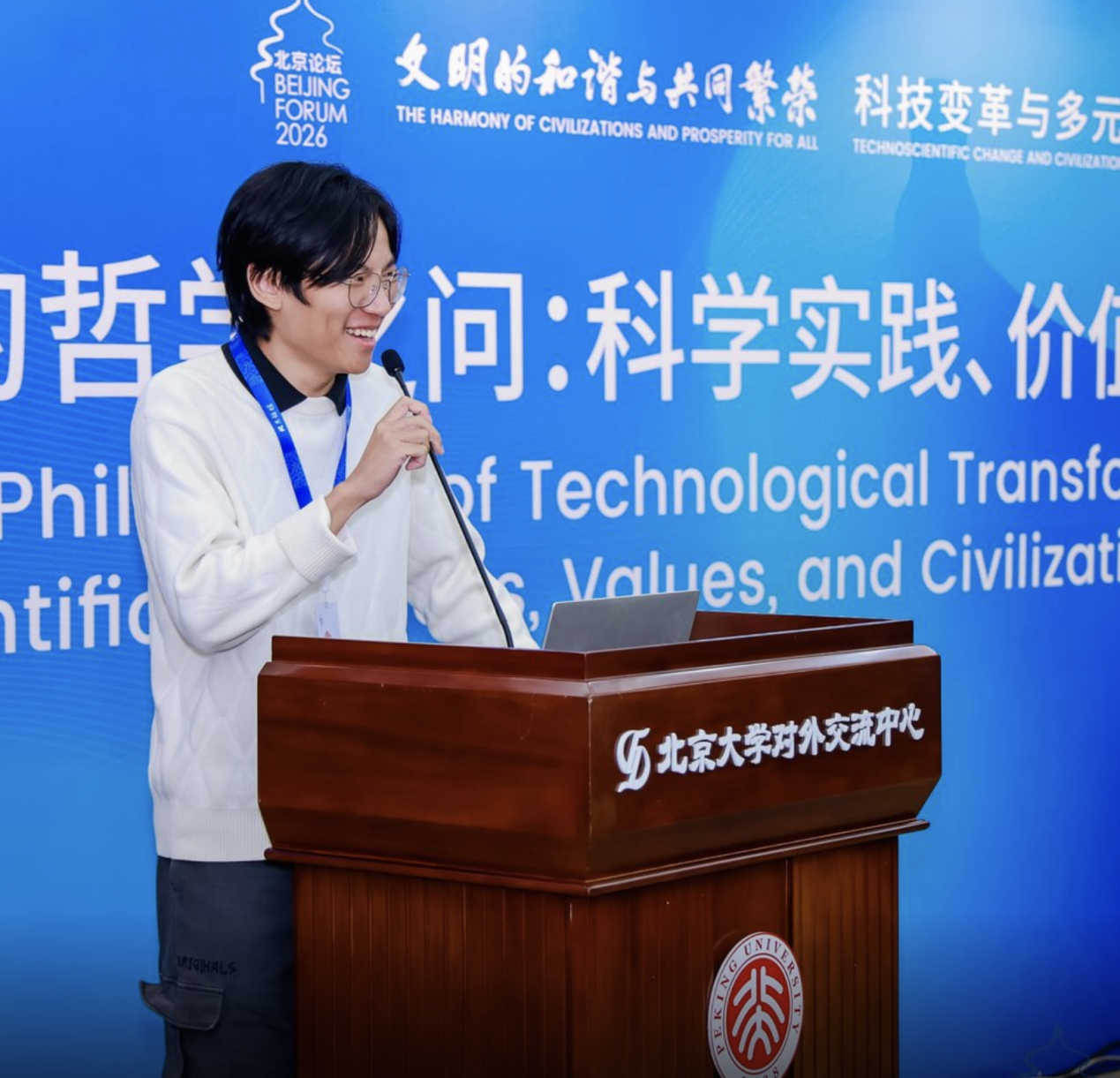
发言人是来自北京大学的王昱洲。王昱洲现为北京大学哲学系助理教授他发言的题目是“作为分布式高阶证据的人工智能道德判断”。 王教授探讨了应当如何看待人工智能针对道德议题给出的判定,议题包括应否为临终患者延续生命这类抉择。他提出不应将 AI 视作道德认知上的对等主体,理由有两点:第一,AI 无法对自己生成的判断承担责任;第二,它不具备道德能力,无法识别具有道德重要性的特征、理解依存关系,或是感知脆弱性。对此,王教授提出另一种定位:把 AI 输出的结果看作分布式高阶证据。一阶证据直接支撑我的判断,而高阶证据指向我自身的推理过程。AI 给出的道德判定,本质上是分散在众多人类个体身上的道德推理的集合,因而可以作为针对我个人推理过程的高阶证据。如果 AI 训练是基于专家数据,并且训练模型能够准确复现专家的推理逻辑,那么这类高阶证据就具备分量,可以影响我对自身判断的确信程度。
The speaker is Yuzhou Wang, who is an assistant professor in the Department of Philosophy at Peking University. The title of the speech is “AI Moral Verdicts as Distributional Higher-Order Evidence.” Professor Wang discussed the question of how we should consider AI-generated verdicts on moral matters, such as the decision of prolonging a dying patient’s life. He argued against treating AI as moral-epistemic peers based on two reasons. First, AI cannot commit to the judgments it generated. Second, it lacks moral competence such as identifying morally significant features, understanding dependence, or experiencing vulnerability. In its stead, Professor Wang proposed to treat AI as providing distributional higher-order evidence. Higher-order evidence concerns my reasoning, as opposed to first-order evidence that directly supports my judgment. AI moral verdicts represent human moral reasoning distributed across many people and as such can function as higher-order evidence regarding my reasoning process. When AI verdicts are trained on experts and when AI models can accurately represent experts’ reasoning, their higher-order evidence holds weight in influencing my confidence in my judgment.
王昱洲教授发言
11月8号下午会议结语
Closing Remarks on the Afternoon of November 8th
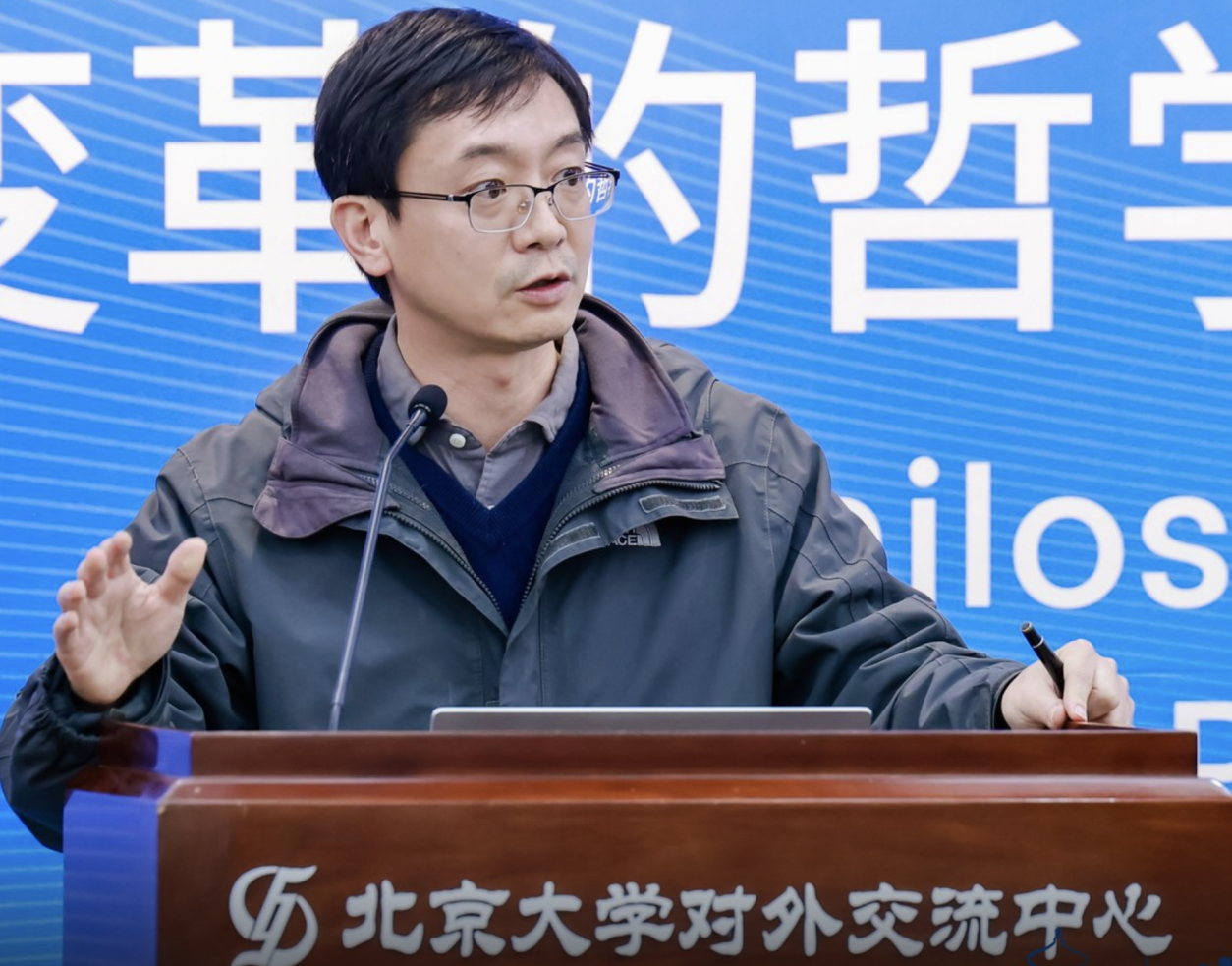
会议的最后,北京大学的刘哲教授给予了简短的会议结语。在两天的会议中,八个主题,刘教授感谢陆俏颖教授和Nicholas The教授的组织,北京论坛秘书处和北京大学哲学系的支持,学生志愿者与技术团队的辛勤付出,以及每一位从海内外不同学府远道而来的学者。从人工智能是否拥有欲望、理解与"自我",到数学实践、生物学研究与抑郁症治疗将如何被技术重塑,八个分主题,二十余场报告中,中外学者给出了彼此不同却同样严谨的回答。正是这些坦诚的提问,分歧和对话,让我们看到哲学之问在科技变革时代的分量。分论坛的讨论到此告一段落,但跨学科、跨文化的对话不会停止。期待下次再会。
At the end of the conference, professor Liu Zhe from the Peking University of China gave a brief concluding remark. He first thanked Professor Qiaoying Lu and Professor Nicholas J. Teh for organizing the penal, to the Secretariat of the Beijing Forum and the Department of Philosophy at Peking University for their support, to the student volunteers and technical team for their dedicated work, and to every scholar who traveled from near and far from different places and countries to join the discussion. He then remarked on the discussion of the conference. From the issues of whether AI possesses desire, understanding, or a self, to how mathematical practice, biological research, and the treatment of depression are being reshaped by technology, many topics received rigorous but genuinely divergent answers from Chinese and international scholars in the eight themed sessions and more than twenty presentations. It is precisely these candid questions, disagreements and conversations that reveal the weight of philosophical questioning in an age of technological change. While the penal had ended, interdisciplinary and intercultural dialogue continues. He ended by saying that he looked forward to meeting all participants again in the future.
刘哲教授结语
供稿|谢文晖, 陈文浩
图片|北京论坛秘书处
审核|陆俏颖